
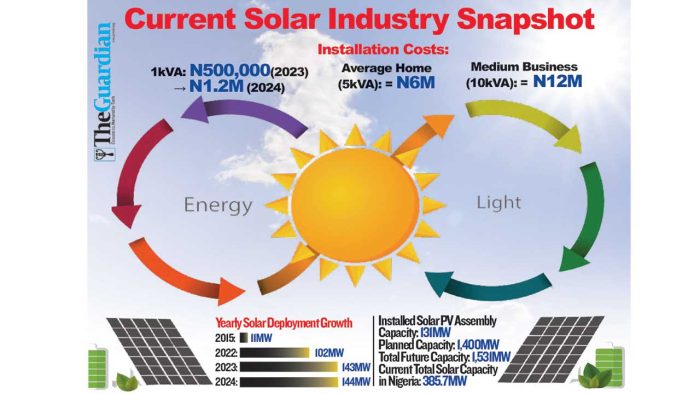
This could worsen the already high energy poverty and increase the cost of doing business as an increasing number of small businesses switch to renewables to reduce the cost of energy consumption.
Nigeria faces a potential 150% surge in solar installation costs as the Federal Government moves to ban imported solar panels, threatening to derail renewable energy adoption. Stakeholders warn the policy could worsen energy poverty and business costs, with local assembly plants—led by firms like Oando and NASENI—unable to match current affordability. “Homes installing 1kva solar for N500,000 now pay N1.2 million,” said Gbenga Olapade of Deemich Renewable Energy, noting small businesses may need up to N12 million for systems.
Nigeria’s solar capacity, which grew from 11MW in 2015 to 144MW in 2024, faces stagnation if imports halt before local production scales up. Oando Clean Energy’s 1,200MW plant, backed by a $950 million World Bank loan, aims to start 600MW production in 2025. “Without local readiness, Africa’s $50 billion solar market will enrich China,” warned Ademola Ogunbanjo, highlighting the tightrope between energy sovereignty and affordability.
READ THE FULL STORY IN THE GUARDIAN