
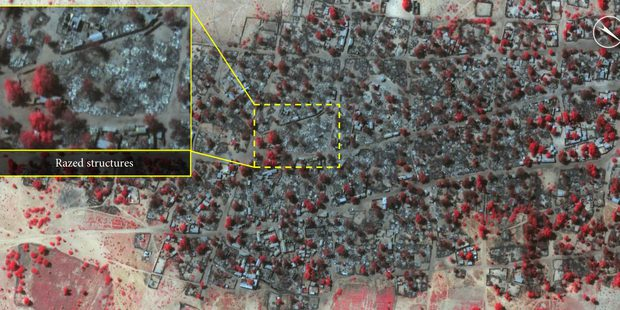
“Hitherto, Marte Local Government comprises over 300 towns and villages. Now we have only one standing.” — Gov. Zulum
Marte Local Government Area in Borno State, once home to 300 thriving farming communities, now teeters on complete collapse with only one village remaining under government control. Governor Babagana Zulum’s May 2024 disclosure underscores how the region—once a breadbasket near Lake Chad—succumbed to relentless insurgent attacks, failed military campaigns, and systemic neglect. What began as sporadic Boko Haram raids in 2013 evolved into total territorial loss by 2024, with ISWAP now governing most of Marte through Sharia courts and forced taxation.
The descent unfolded in phases: by 2014, militants had displaced 300,000 people and torched villages like Ngurmuji. A 2015 military “victory” proved fleeting when insurgents recaptured Marte within months. For years, the area became a no-man’s-land—markets shuttered, hospitals abandoned. Despite periodic army counteroffensives, including a 2021 operation reclaiming New Marte, ISWAP’s January 2024 assault on military bases marked the tipping point, forcing mass civilian evacuations.
“We live in Boko Haram’s shooting range,” a resident lamented in 2020—a reality now institutionalized under ISWAP’s parallel government. The group enforces strict Sharia, conducts public floggings, and recruits children while offering food and healthcare to coerce compliance. Governor Zulum’s plan to resettle 30,000 displaced persons collapsed in May 2024 after ISWAP overran army bases, looted weapons, and triggered a fresh exodus to Dikwa.
With the military’s Forward Operating Base destroyed and 20,000 civilians displaced, Marte epitomizes Nigeria’s counterinsurgency failures. “If we lose our last village, we lose the entire LGA,” Zulum warned, underscoring the stakes as ISWAP tightens its grip on the Lake Chad basin.