
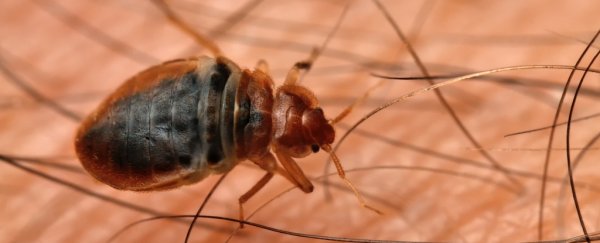
The research traces the human bed bug (Cimex lectularius) back some 50,000 years, when the parasite jumped from bats to humans.
Bed bugs may have been the first pest to plague human cities, predating even black rats and cockroaches, a new study in Biology Letters suggests.
The research traces the human bed bug (Cimex lectularius) back some 50,000 years, when the parasite jumped from bats to humans. According to Virginia Tech entomologist Lindsay Miles, “Initially with both populations, we saw a general decline that is consistent with the Last Glacial Maximum; the bat-associated lineage never bounced back… The really exciting part is that the human-associated lineage did recover and their effective population increased.”
As humans moved into cities about 12,000 years ago, bed bugs thrived. A short respite came with the invention of DDT in the 1940s, but they soon reemerged.
The study notes that modern human-associated bed bugs show narrow genetic diversity, likely due to a small founding population. Today, they are global and increasingly pesticide-resistant — unwelcome proof of a very old bond with humans.