
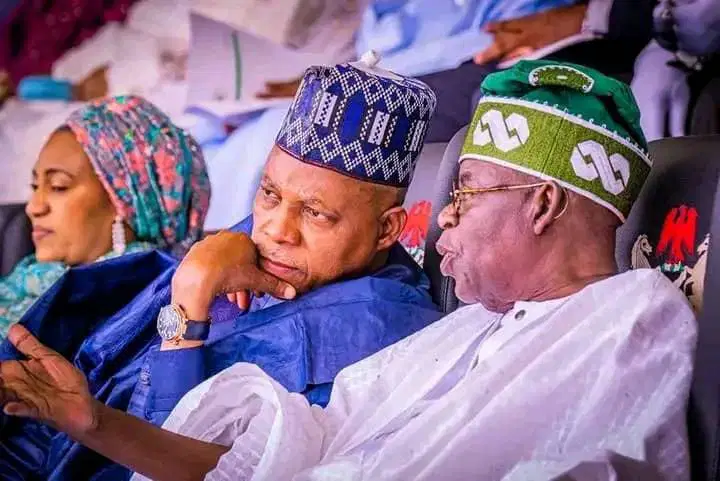
A major political crisis erupted at a high-level All Progressives Congress (APC) stakeholders’ meeting.
A major political crisis erupted at a high-level All Progressives Congress (APC) stakeholders’ meeting in Gombe on Sunday, June 15, 2025, as tensions flared over the perceived sidelining of Vice President Kashim Shettima from the 2027 presidential ticket alongside President Bola Tinubu.
The meeting, initially aimed at consolidating support for the Tinubu/Shettima ticket, spiraled into chaos after APC North-East Zonal Vice Chairman, Mustapha Salihu, conspicuously omitted Shettima’s name while endorsing Tinubu for re-election. The omission sparked outrage among Shettima loyalists, particularly from Borno State, who viewed it as a calculated political slight.
Violence broke out as chairs and objects were hurled at Salihu, who had to be rescued by security forces. The unrest, which lasted over 20 minutes, forced the use of teargas to restore calm. Prominent APC leaders, including the three North-East governors—Zulum (Borno), Buni (Yobe), and Yahaya (Gombe)—were present.
The incident laid bare deep divisions within the APC’s North-East caucus, with some party elites allegedly working behind the scenes to replace Shettima on the 2027 ticket, citing underwhelming support from the region during the 2023 elections.
Despite the chaos, many APC stakeholders and regional leaders have thrown their weight behind Shettima, condemning attempts to sideline him. Figures such as Dr. Umar Duhu, Kabir Wanori, and Hassan Zanna Boguma argued that Shettima’s loyalty and contributions to the party and region cannot be disregarded. They warned that removing him would be a betrayal of the North-East’s sacrifices.
APC Deputy National Chairman (North), Hon. Ali Bukar Dalori, downplayed the unrest, affirming that the Tinubu/Shettima ticket remains non-negotiable. He described the fracas as part of political disagreement, assuring Nigerians that the party remains united.
However, the fallout from the Gombe incident has exposed cracks in the party’s internal cohesion and triggered fears of realignment ahead of the 2027 elections, particularly as opposition parties begin to mobilize.