
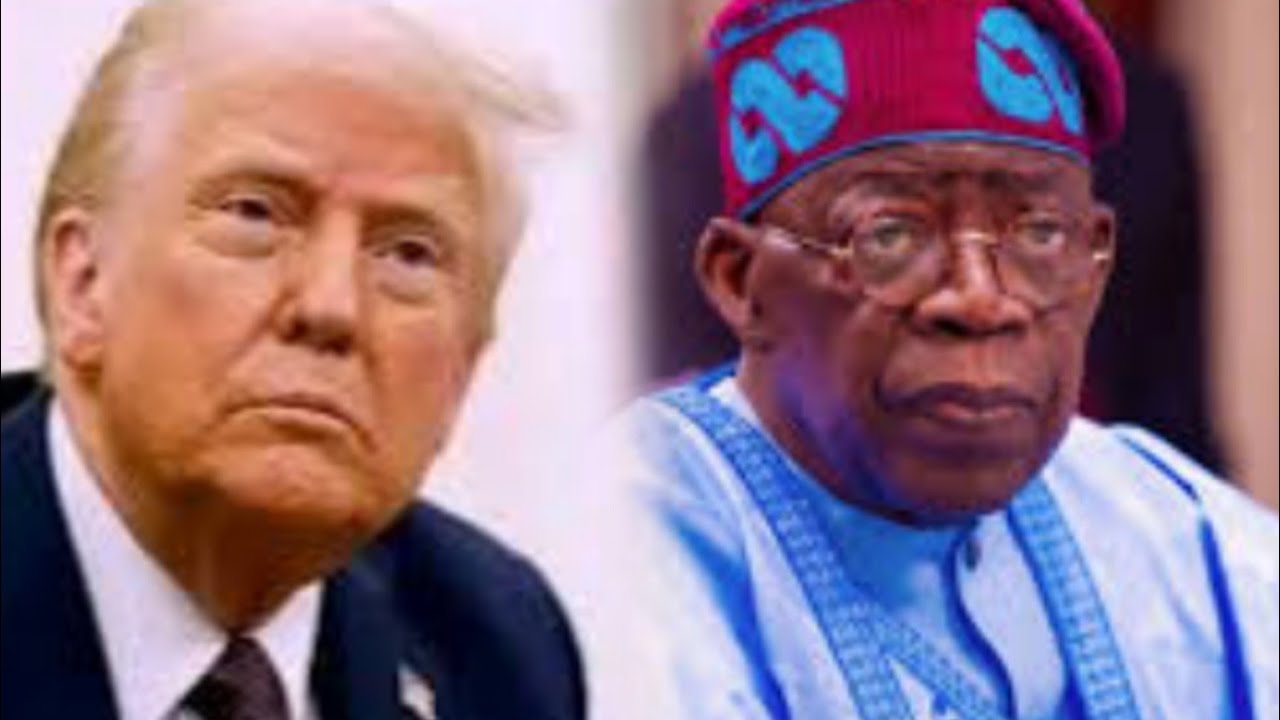
Nigeria has strongly condemned the U.S. Mission for allegedly interfering in its domestic affairs by amplifying a misleading report criticizing state governance, accusing Washington of hypocrisy and violating diplomatic protocols while reaffirming the need for mutual respect in bilateral relations.
By Nij Martin
The diplomatic relationship between Nigeria and the United States, often a pillar of stability and partnership, has recently been strained by what Abuja describes as a “relentless smear campaign” and a violation of diplomatic ground rules. At the heart of the latest row is the U.S. Mission’s circulation of a report by The Africa Report that painted a picture of Nigerian political elites “splurging state resources on buildings while citizens went hungry.”
The report specifically singled out Governors Seyi Makinde of Oyo State and Inuwa Yahaya of Gombe State for constructing new government houses. However, Nigerian government sources have vehemently defended the two leaders, describing them as among the nation’s most prudent and fiscally disciplined governors. Makinde has been widely recognized for his performance and fiscal accountability, while Yahaya’s meticulous management has ensured salaries are paid, hospitals are built, and livelihoods are improving. Officials suggest the report is not only factually incorrect but may stem from darker motives, which the U.S. Mission is accused of “gleefully amplifying.”
This latest flashpoint follows a pattern of what Nigerian officials perceive as diplomatic overreach. A senior diplomat referenced Article 41(1) of the Vienna Convention, which mandates that diplomats must not interfere in the internal affairs of their host country. They argue that circulating such a critical and, in their view, jaundiced report is a clear breach of this principle.
This is not the first time Washington has been accused of misjudging Nigeria. Government officials recalled the U.S.’s incorrect prediction that the country would “disintegrate by the year 2000,” a forecast that became a symbol of a persistent, and often flawed, foreign narrative about Nigeria.
The simmering frustration reached a new level with a recent U.S. State Department travel advisory, which warned Americans to avoid 18 Nigerian states. Nigerian analysts have condemned the advisory as “alarmist and context-free,” noting that it unfairly characterizes the entire country as unsafe while ignoring thriving urban centers like Lagos and Abuja. One analyst pointed out the stark irony, observing that with roughly 47,000 Americans projected to die from gun violence this year, the U.S. is issuing sweeping warnings about Nigeria, failing to acknowledge that many Nigerian regions are safer than high-crime American cities. “It’s a distorted mirror,” the analyst stated.
Despite the escalating tensions, officials maintain that Nigeria still values its longstanding partnership with Washington. The message, however, is clear and non-negotiable: this relationship cannot come at the cost of Nigeria’s sovereignty or national dignity. Abuja is demanding that the U.S. Mission respect diplomatic protocol and cease spreading what it calls “jaundiced narratives,” or risk further straining ties with Africa’s most populous democracy. The pushback is a stand not just for two governors, but for a nation’s right to self-determination and respect on the world stage.