
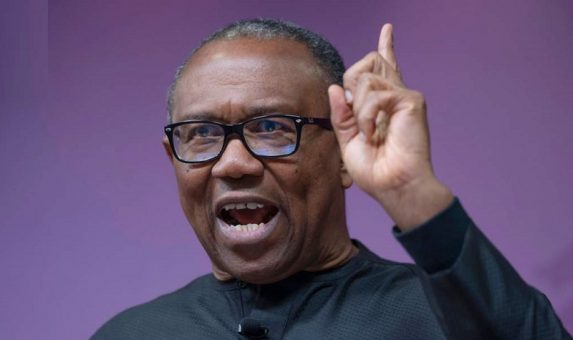
“Leadership, to me, is not about entitlement. It is about service,” Obi insists amid growing debate over his one-term vow.
Peter Obi, the Labour Party’s presidential candidate in the 2023 elections, has once again defended his controversial one-term pledge, dismissing claims that his vow is a desperate bid for power.
In a recent statement on X (formerly Twitter), Obi insisted that his commitment stems from a sincere desire to rebuild Nigeria, not personal ambition.
“I still find it baffling that my decision to do a term of four years, if given the mandate to rule this country, is generating so much agitation,” Obi wrote. “By this feeling, we are doubting the fact that a sincere leader can achieve much in 48 months.”
The Desperation Debate
Critics have questioned Obi’s motives, suggesting that his one-term promise is either unrealistic or a calculated political move. Some have drawn comparisons to leaders like Nelson Mandela, who stepped down after one term, while others accuse Obi of hypocrisy, citing his two-term tenure as Anambra governor.
“You sought re-election as Anambra Governor in 2010 and narrowly won courtesy of a divided opposition,” a critic fired back. “Why didn’t you walk away after only one term in office?”
Obi, however, maintains that desperation has never been his style. “I have never been desperate in the pursuit of power, or anything else, for that matter,” he stated, listing traits of desperate politicians—such as aggressive rhetoric, policy flip-flops, and electoral malpractice—as behaviors he has never exhibited.
Can Nigeria Be Fixed in Four Years?
Obi argues that meaningful change is possible within a single term if governance is transparent and focused.
“In four years, we can confront corruption head-on, redirecting resources to priority areas,” he said, citing wasteful expenditures like the purchase of new presidential jets as funds that could have been channelled into education and healthcare.
But skeptics remain unconvinced. “If you couldn’t transform a small Anambra after 8 years, is there a guarantee that you’ll do anything significant under 4 years as President of a complex Nigeria?” one critic challenged.
The Verdict: Service or Ambition?
At the heart of the debate is whether Obi’s pledge is a selfless sacrifice or a strategic play for public sympathy. His supporters see it as a bold commitment to accountability, while opponents view it as political posturing.
One thing is certain: as the 2027 elections draw closer, Obi’s one-term promise will remain a contentious topic. Whether he is truly desperate to fix Nigeria—or just desperate to be president—only time will tell.