
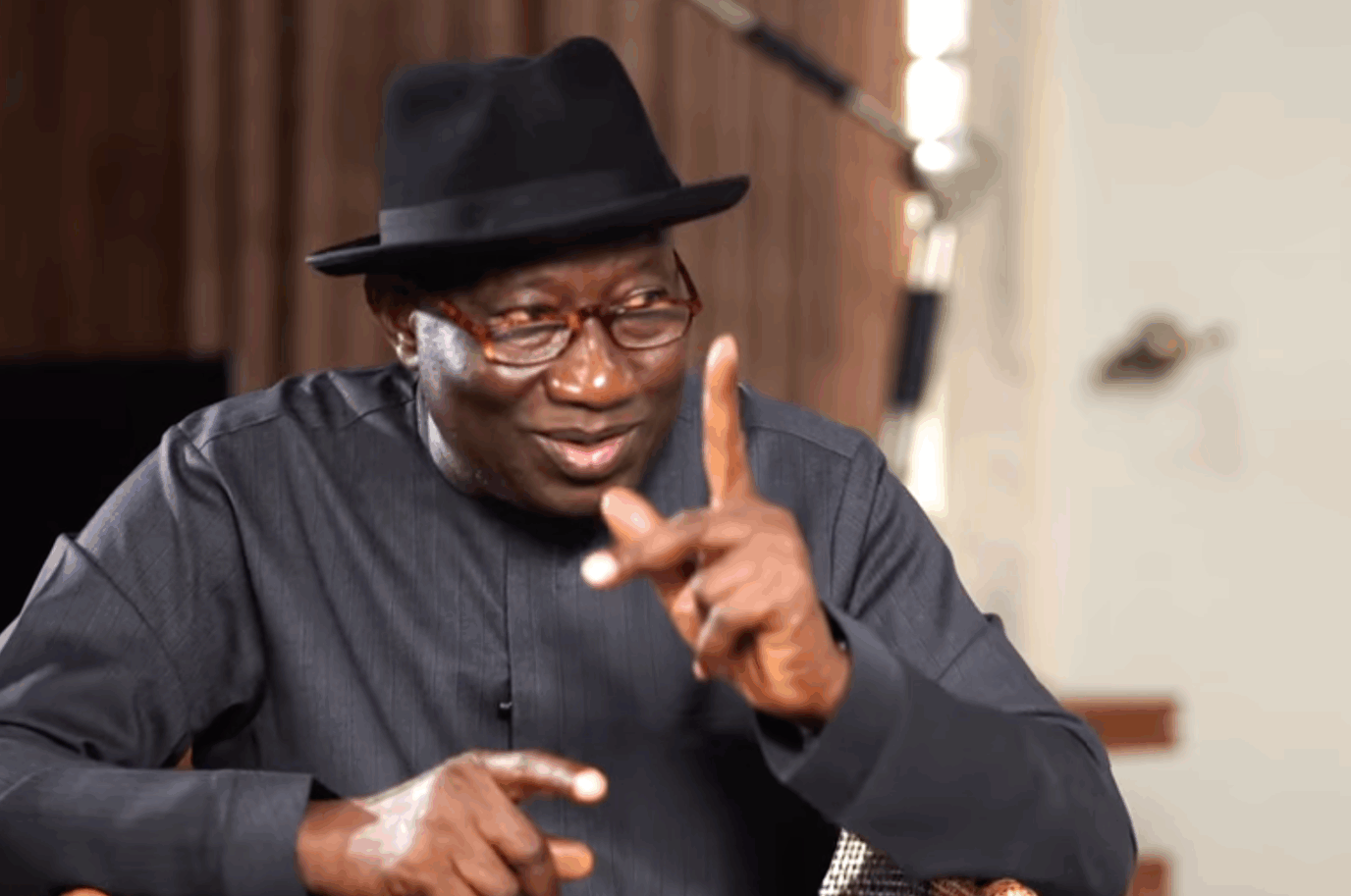
The constitutional debate over Jonathan’s eligibility hinges on a 2018 amendment that bars anyone sworn in as president twice from running again
By Nij Martin
The political landscape in Nigeria is shifting once again, with a familiar face at the center of a new national conversation. Reports from outlets like DAILY POST and Vanguard indicate that former President Dr. Goodluck Jonathan is being actively pressured to contest the 2027 presidential election. This movement, driven by key leaders within and outside the Peoples Democratic Party (PDP), comes amid a growing sense of national hardship and a public re-evaluation of his past administration. According to a close ally, Jonathan has allegedly agreed to run, with a primary goal of addressing “Nigeria’s rising poverty, hardship and the general suffering that had gripped the citizenry since the All Progressives Congress, APC took over power in 2015.”
The push to bring Jonathan back is not just a fringe movement. A Deputy National Publicity Secretary of the PDP, Mallam Ibrahim Abdullahi, confirmed that the party has been actively making moves to woo him. In a statement that reflects a palpable public mood, Abdullahi said, “Many Nigerians have come to realise the mistake they made in not re-electing Dr. Jonathan. They now acknowledge his achievements and are even apologising, pleading with him to return and rescue the country.” The narrative is that Jonathan, a leader widely praised for his peaceful handover of power in 2015, is the ideal candidate to stabilize the country. His ally also confirmed that Jonathan has met with key figures, including former Nigerian military president General Ibrahim Babangida, to brief him on his desire to run for a single four-year term.
The idea of a single-term presidency is a key component of the political maneuvering. The reports suggest that by supporting Jonathan for one term, there is a clear pathway for power to return to the northern region in 2031, allowing them to potentially hold it for another eight years without a serious contest from the south. This strategy, as a political calculus, seeks to satisfy the aspirations of both the southern and northern power blocs, creating a fragile but potentially powerful alliance. It paints Jonathan not just as a returning hero, but as a transitional figure who can bridge political divides and stabilize the nation’s fragile power-sharing agreements. However, this raises questions about the democratic process and the precedent it sets for future elections.
While the political momentum is undeniable, Jonathan’s potential candidacy faces a significant legal challenge that has already divided the nation’s top lawyers. The core of the debate lies in a 2018 constitutional amendment, known as the Fourth Alteration Act, which introduced a new provision under Section 137(3). This section states, “A person, who was sworn in to complete the term for which another person was elected as President, shall not be elected to such office for more than a single term.” Since Jonathan first took the oath of office in 2010 to complete the term of the late President Umaru Yar’Adua before winning his own election in 2011, this amendment appears to place a legal barrier on his path to a new term.
However, many legal experts argue that the law cannot be applied retroactively. The legal principle of non-retroactivity, often expressed as a law not having effect on actions taken before its passage, is central to this argument. Senior Advocate of Nigeria (SAN), Mr. Dayo Akinlaja, insists that Jonathan “was sworn in and did a term under the old constitutional dispensation” and that the law, which took effect in June 2018, cannot be used to bar him. Another senior lawyer, Mr. Elekwachi Nnabuihe, supported this view, arguing, “The amendment came in 2017, while Jonathan already vied for a second term in 2015. If he was legally qualified to contest presidential election at that time, nothing forbids him from doing so again.” This position was notably upheld by a Federal High Court in Yenagoa in 2022, which ruled that Section 137(3) could not have a retroactive effect. The judge held that Jonathan’s 2010 oath was to comply with a constitutional provision and not because he was elected, a key distinction.
Despite these arguments, a dissenting opinion from human rights lawyer Mr. Johnmary Jideobi warns of a potential legal quagmire. He insists that if Jonathan were to win, he would exceed “the maximum number of eight years contemplated by the Constitution for any person to occupy the office of the President.” Jideobi’s argument is rooted in the jurisprudence of the Supreme Court, which has previously ruled against tenure elongation, suggesting that Jonathan’s combined years in office could be a point of contention. This line of reasoning contends that the spirit of the constitution is to prevent any individual from serving more than two full terms, and Jonathan’s previous time in office, combined with a potential new term, would violate that fundamental principle. The legal battle, should it materialize, would likely center on a highly technical interpretation of “elected” versus “sworn in,” and the intent behind the 2018 alteration.
For now, the PDP appears determined to pursue Jonathan, with some insiders, like the party’s National Financial Secretary Daniel Woyengikuro, even calling for an “automatic ticket.” As Woyengikuro put it, “Is he not the best candidate for us at this moment? He is not just a former president; he is the leader of the party now.” An automatic ticket for Jonathan would send a clear signal that the party has its heart set on a specific candidate, potentially alienating other aspirants and causing internal strife. It would also circumvent the usual primary process, which could be seen as undemocratic, but the party leadership seems willing to make this move in their bid to defeat the incumbent, President Bola Tinubu. This strategic decision would not only shape the PDP’s internal dynamics but also the overall political conversation leading up to the 2027 elections.
The coming months will be crucial. Jonathan’s reported consultations with political stakeholders, particularly in the North and South-South, are indicative of a serious and calculated approach. His acceptance of the proposal, coupled with the PDP’s aggressive courtship, suggests that a comeback is more than just a rumor. However, the enthusiasm of politicians and party members does not automatically resolve the legal questions. The judiciary will ultimately be the final arbiter of Jonathan’s eligibility. The nation watches with keen interest to see if a former president can indeed make a historic comeback, or if a constitutional amendment will halt his political resurgence before it truly begins.