
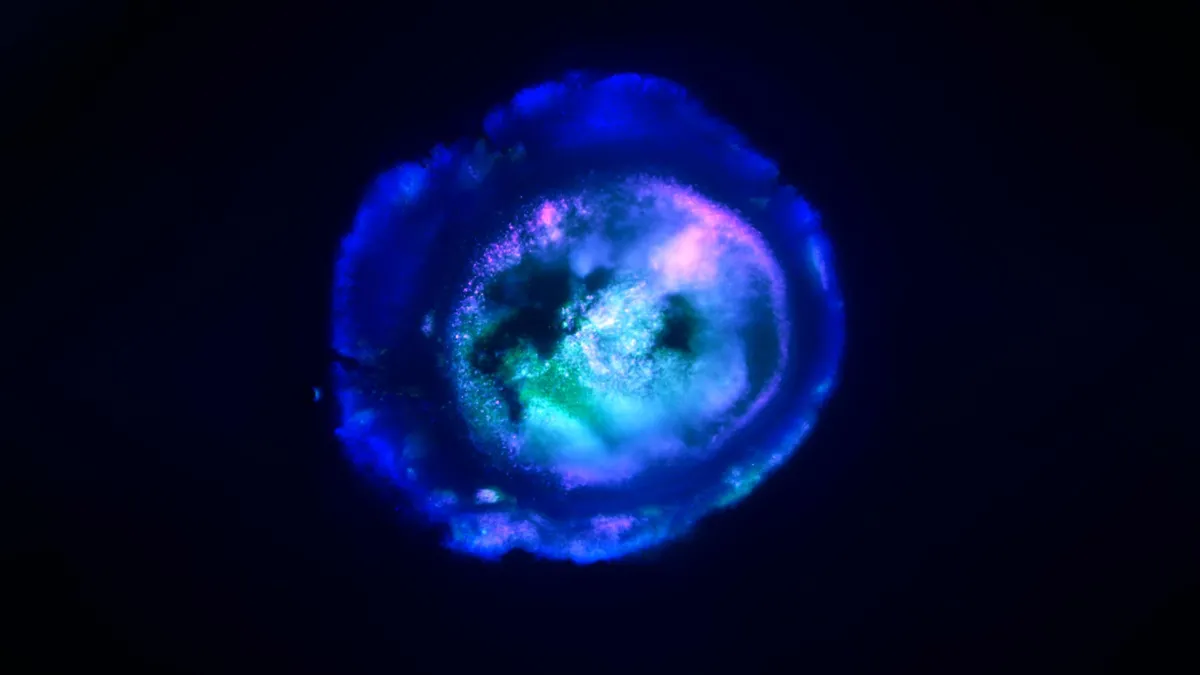
We’ve made the next generation of brain organoids,” said lead author Annie Kathuria, assistant professor of biomedical engineering
Johns Hopkins University scientists have developed a first-of-its-kind “multi-region brain organoid” (MRBO) that mimics an entire human brain, complete with neural tissues and rudimentary blood vessels. The breakthrough, published in Advanced Science, could transform research into conditions such as autism, schizophrenia, and Alzheimer’s disease.
“We’ve made the next generation of brain organoids,” said lead author Annie Kathuria, assistant professor of biomedical engineering. Unlike most organoids representing a single brain region, the MRBO integrates tissues from all brain regions, enabling them to connect and produce electrical activity.
The organoid, similar to a 40-day-old human fetal brain, contains about 6–7 million neurons—far fewer than the billions in adult brains—but retains roughly 80% of early-stage cell types. Researchers also observed early blood-brain barrier formation.
Kathuria said whole-brain organoids could allow scientists to watch disorders develop in real time, test treatments, and tailor therapies to patients. She added: “If you can understand what goes wrong early in development, we may be able to find new targets for drug screening.