
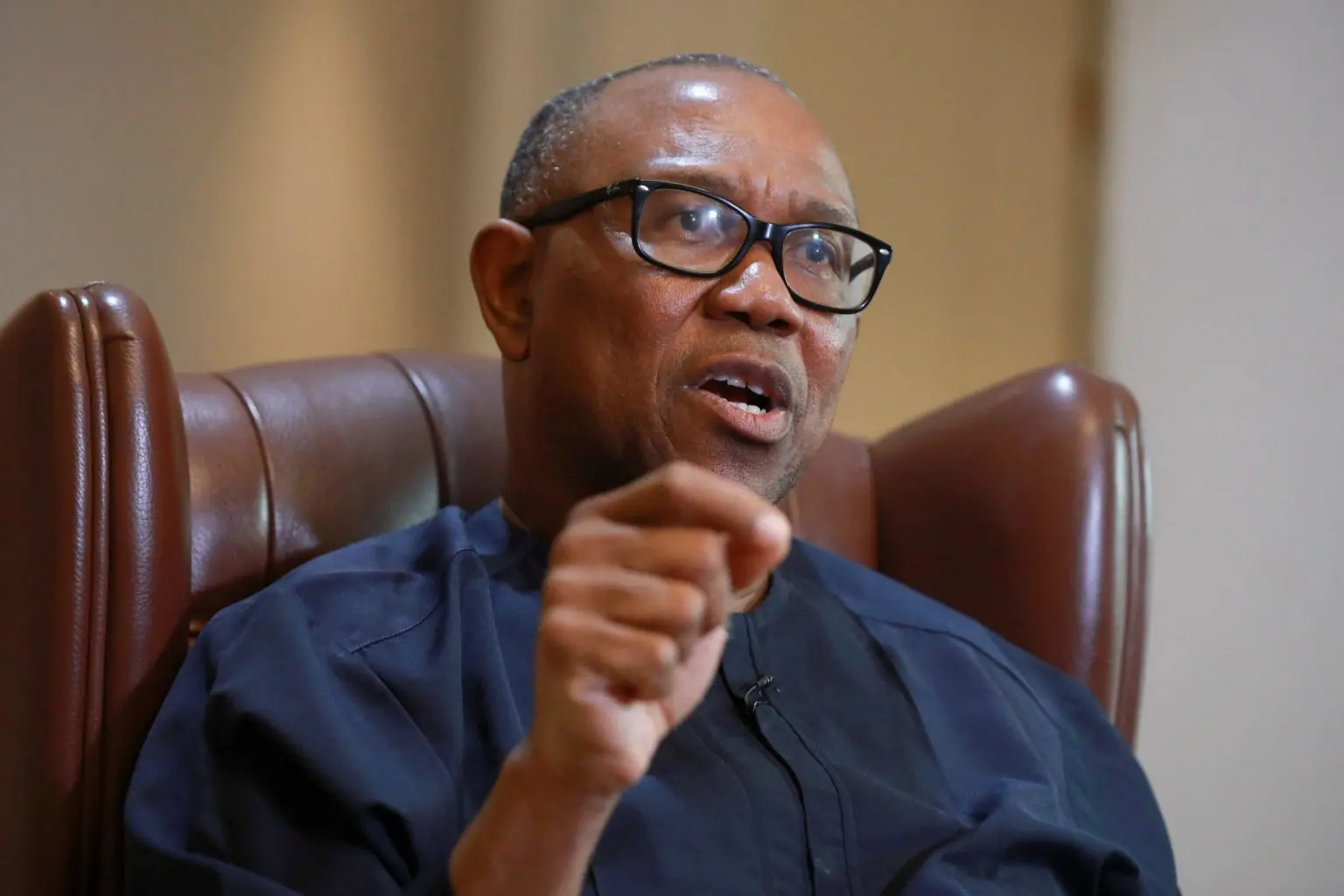
Peter Obi’s sacrosanct pledge – Can the North trust a one-term Southern President?
Peter Obi’s declaration that he would serve only one term if elected president in 2027 has sparked heated debates across Northern Nigeria, dividing elders, political groups, and youth organizations. While some see it as a strategic move to respect zoning and attract Northern votes, others dismiss it as a desperate political gimmick.
The former Labour Party presidential candidate insists his pledge is rooted in principle, citing global leaders like Mandela and Lincoln who made lasting impacts in short tenures. But in Nigeria’s volatile political landscape, where promises are often broken, can Obi’s vow be trusted?
Obi’s Defense: Leadership Over Longevity
In a recent statement on X (formerly Twitter), Obi reinforced his commitment:
“One of the greatest American Presidents, Abraham Lincoln, served only four years, yet his legacy endures as a model of principled leadership. Another iconic figure, John F. Kennedy, did not even complete a full term, yet his vision and ideals continue to inspire generations.”
He also referenced Nelson Mandela’s single-term presidency in South Africa, framing his own pledge as an act of selfless leadership:
“Longevity in office is not a mark of success; rather, it is purposeful, accountable service – however brief – that defines true statesmanship.”
Obi dismissed critics who question his sincerity, stating:
“They are judging me by their own standards — where political promises are made to be broken. But they forget, or perhaps choose to ignore, that Peter Obi is not cut from that cloth.”
Northern Reactions: Trust vs. Political Expediency
1. Arewa Consultative Forum (ACF): A National, Not Regional Issue
Prof. Tukur Muhammad Baba, ACF’s National Publicity Secretary, argued that Obi’s pledge is irrelevant to constitutional requirements:
“Such a stance is not a constitutional provision… In the past, others had made similar promises without effect. A presidential candidate, who is late, made a similar promise when campaigning for office, and we know what happened.”
He questioned whether Nigerians would reject Obi for a second term if he performed well, calling the pledge “crass and unnecessary.”
2. Northern Youths: “Desperation, Not Trust”
Salihu Muhammad Danlami, Speaker of the Arewa Youth Assembly, dismissed Obi’s promise outright:
*“Northern Nigeria cannot accept Peter Obi’s one-term promise. This is pure desperation to get power. We cannot forget in a hurry how Peter Obi turned the 2023 presidential election into a religious and ethnic affair.”*
He referenced Goodluck Jonathan’s failed one-term promise in 2011, warning that history could repeat itself.
3. Northern Elders: “Political Arithmetic Favours Tinubu”
Anthony Sani, former ACF Secretary-General, framed Obi’s pledge as a tactical move to align with zoning politics:
“Peter Obi’s pledge is informed more by his desire to seek accommodation by the politics of zoning… Naturally, northerners would prefer President Bola Tinubu to Peter Obi due to the term limits.”
He argued that Obi’s eventual decision would be influenced by political forces beyond his control.
The Trust Deficit in Nigerian Politics
Jamilu Charanchi, National Coordinator of the Coalition of Northern Groups (CNG), captured the broader skepticism:
“Nigeria’s political landscape continues to suffer from a chronic trust deficit, driven by a long-standing culture of empty promises and post-election betrayal.”
He cited Tinubu’s unfulfilled electricity promises and Obi’s pledge as examples of “high-sounding declarations with little clarity on implementation.”
CAN’s Counter: “Judge Leaders by Their Records”
Elder Sunday Oibe of Northern CAN urged Nigerians to assess Obi based on his past performance:
“Has he done anything that shows he can’t be trusted before now? All those that have been given opportunity to lead before Peter Obi, what has been their pedigree?”
He argued that Nigeria should move beyond regional biases and focus on competence.
The Zoning Factor and 2027 Calculations
Nigeria’s unwritten zoning arrangement expects power to return to the North in 2031 after eight years of Southern presidency (2023-2031).
- APC’s Strategy: The ruling party has weaponized Obi’s pledge, framing it as uncertainty.
- Atiku’s Shadow: Some Northern groups prefer Atiku Abubakar, who may run under ADC.
- Jonathan Wildcard: Ex-President Goodluck Jonathan is being courted as a one-term alternative.
Kano’s Verdict: “Obi Can’t Win Alone”
Salihu Tanko Yakasai, PRP gubernatorial candidate, dismissed Obi’s chances without Northern backing:
“We all know politicians and their promises. Before election they promise you heaven, after election, they’ll shamelessly backtrack.”
Munsur Guzura of CNG-Kebbi insisted the North would only support Obi if he runs with Atiku as his vice.
Will the North Buy Obi’s Promise?
Peter Obi’s one-term pledge has intensified Nigeria’s political fault lines. While his supporters see it as a mark of integrity, Northern skeptics view it as a hollow tactic.
With 2027 approaching, the key question remains: Can a Southern president with a self-imposed term limit convince the North to abandon its preference for continuity under Tinubu or a return to Northern leadership?
The answer may define Nigeria’s next political era.