
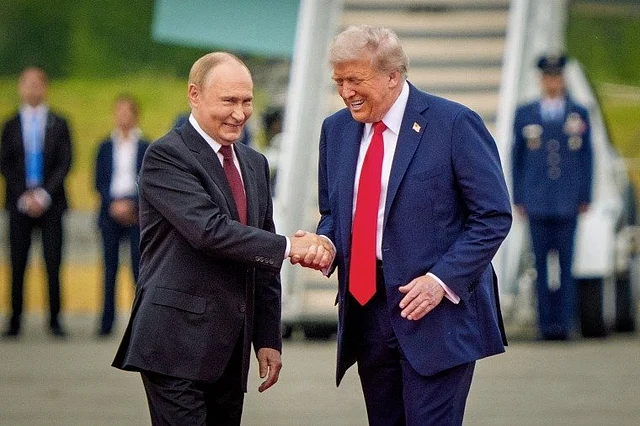
The Anchorage summit between Donald Trump and Vladimir Putin was billed as a historic chance to end the Ukraine war. Instead, it revealed a brutal truth: Putin achieved everything he wanted without conceding a single battlefield gain.
By Nij Martin
The Anchorage summit between Donald Trump and Vladimir Putin was billed as a historic chance to end the Ukraine war. Instead, it revealed a brutal truth: Putin achieved everything he wanted without conceding a single battlefield gain.
The Theater of Diplomacy
From the moment Putin stepped onto the red carpet at Joint Base Elmendorf-Richardson, the choreography favored Moscow. The Russian leader, once isolated as a war criminal, was now a presidential guest—grinning beside Trump in the back of the armored limousine dubbed “The Beast.” The optics were deliberate: Putin, framed against U.S. military might (including a B-2 bomber flyover), projected parity with America.
The Substance (or Lack Thereof)
Putin’s opening remarks set the tone: vague appeals to “eliminate root causes” of the war—code for halting NATO expansion and legitimizing Russia’s territorial claims. Trump, uncharacteristically terse, admitted no deal was reached, citing “one significant” unresolved issue (likely Ukraine’s sovereignty). Crucially, there was:
- No ceasefire
- No commitment to include Zelensky
- No reversal of sanctions
Putin’s sole concession—a throwaway line about Ukraine’s security—was drowned out by his invitation to meet next in Moscow, a venue guaranteeing Ukrainian exclusion.
The Hidden Wins
- Legitimacy Restored: For Putin, simply standing alongside Trump on U.S. soil erased years of pariah status. His delegation—including economic envoys—hinted at ambitions to thaw trade.
- Divide and Conquer: By praising Trump’s “sincere efforts,” Putin drove a wedge between the U.S. and Europe. Trump’s later advice to Zelensky—”Make a deal”—echoed Kremlin talking points.
- War by Other Means: The summit bought Russia time to grind forward in Ukraine. As analyst Doug Klain noted, “Putin knows Trump’s levers: flattery, transactional deals, and chaos among allies.”
Trump’s Miscalculation
The president’s claim of an “extremely productive” meeting rang hollow. His three-minute press conference—uncharacteristically devoid of crowing or questions—suggested frustration. Key failures:
- No leverage: Trump offered no public threats (e.g., escalated arms to Ukraine) to compel Russian concessions.
- NATO sidelined: Instead of unified Western demands, Trump promised “a few phone calls” to brief allies—a far cry from collective pressure.
- The Moscow Trap: Accepting Putin’s invitation risks further legitimizing Russia’s narrative without Ukrainian representation.
What Comes Next?
The summit’s legacy may be symbolic: Putin proved he could wage war and win diplomatic rehabilitation simultaneously. For Ukraine, the path grows darker. With Trump focused on “deals” and Putin emboldened, Zelensky faces pressure to capitulate or fight on without guaranteed U.S. support.
As the world dissects the Alaska photos—Putin’s smirk, Trump’s strained smile—one image lingers: the “Pursuing Peace” banner behind them, a slogan now tinged with irony.
Final Analysis: Putin didn’t just leave Alaska with a win; he left with a blueprint to fracture the West while his tanks roll forward.