
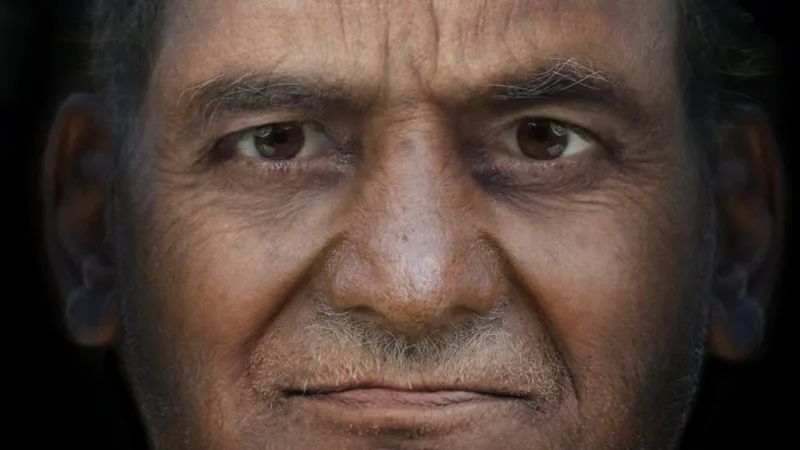
Scientists digitally reconstructed 2,500-year-old skulls from Tamil Nadu, revealing evidence of an ancient independent civilisation and diverse ancestral origins.
Researchers in Tamil Nadu have digitally reconstructed the faces of two 2,500-year-old skulls excavated at Kondagai, near the ancient Keeladi site. Using DNA extraction, 3D scans and forensic technology, experts at Madurai Kamaraj University and Face Lab, Liverpool John Moores University, recreated portraits believed to reflect the region’s early inhabitants. Professor G Kumaresan, who leads the project, said, “We want to understand our ancestry and the migration routes of our ancestors. It’s a journey towards answering the larger question of ‘who are we and how did we come to exist here’.”
The reconstructions suggest the skulls belonged to men with features linked to Ancient Ancestral South Indians, along with traces of Middle Eastern and Austro-Asiatic ancestry, indicating early population mixing. Archaeologists argue the Keeladi findings prove an advanced southern civilisation existed independently around 580BC. “The message we can all take home is that we are more diverse than we realise, and the proof of this lies in our DNA,” Prof Kumaresan added.