
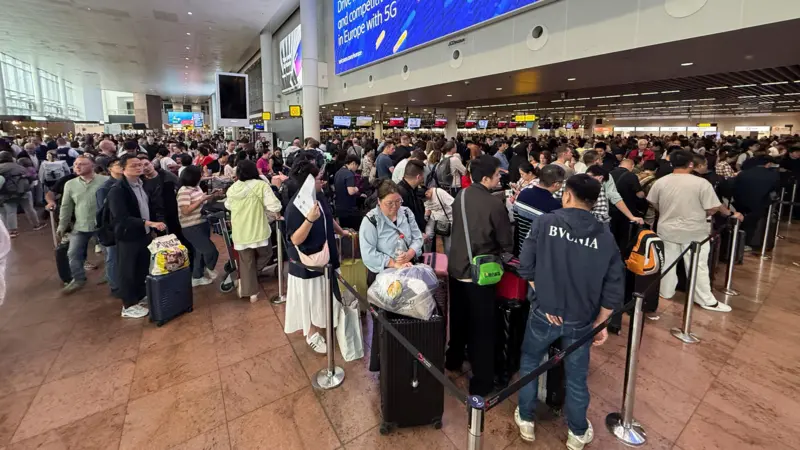
A cyberattack on Collins Aerospace’s airline software caused major disruptions at several European airports, delaying flights and leaving passengers stranded.
A cyberattack targeting software used for passenger check-in and boarding disrupted operations at major European airports on Saturday, forcing delays, cancellations, and diversions.
The outage, traced to MUSE software developed by Collins Aerospace, affected London’s Heathrow, Brussels, Berlin, Dublin, and Cork airports. Heathrow, the continent’s busiest hub, confirmed the disruption, while Brussels Airport asked airlines to cancel half of Sunday’s departures to avoid further chaos.
RTX, Collins Aerospace’s parent company, acknowledged a “cyber-related disruption” but declined to name affected airports or identify the attackers. “The impact is limited to electronic customer check-in and baggage drop and can be mitigated with manual check-in operations,” the company said.
As of 1130 GMT, 29 flights had been cancelled across Heathrow, Berlin, and Brussels, according to Cirium data. Officials in Brussels also reported four diversions.
Passengers described confusion and long waits. “We haven’t been told anything except that there was a technical fault,” said Kim Reisen at Berlin Airport.
Cybersecurity experts said the incident underscored aviation’s vulnerability. “The threat is significant and very real,” said Rafe Pilling of Sophos.