
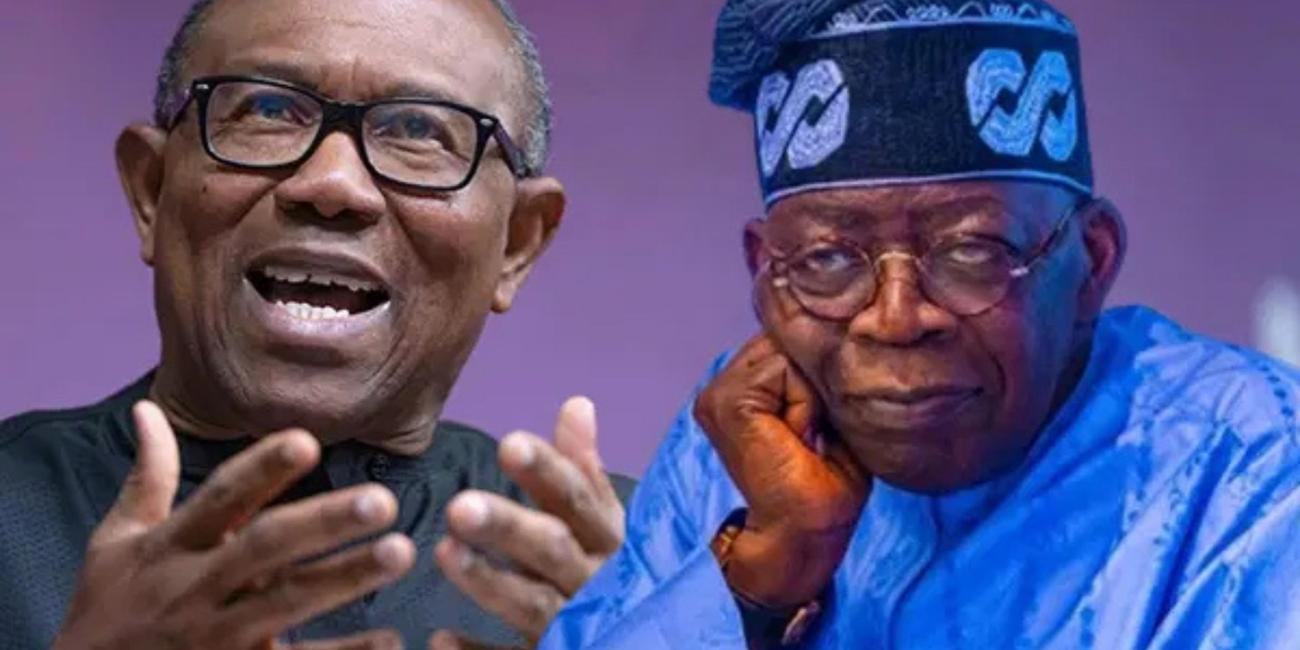
“Empowerment is not a slogan or a campaign tool – it must be proven by results,” Peter Obi said in a statement on Wednesday.
Obi, in a statement on Wednesday, titled: “Where Did ₦1 Trillion Go?” questioned about the effectiveness of this funding, citing the country’s persistent economic challenges.
The former Labour Party Presidential candidate for the 2023 elections, Mr Peter Obi has questioned the recent report by the Development Bank of Nigeria (DBN) claiming that it had disbursed over ₦1 trillion to Micro, Small, and Medium Enterprises (MSMEs) in Nigeria since 2015.
Obi, in a statement on Wednesday, titled: “Where Did ₦1 Trillion Go?” questioned about the effectiveness of this funding, citing the country’s persistent economic challenges.
According to DBN’s Managing Director, Tony Okpanachi, the bank has disbursed over ₦1 trillion to MSMEs through 79 participating financial institutions across the country, supporting more than 69,000 MSMEs in economically disadvantaged states.
The bank stated that it aims to grow its outstanding loan portfolio to over ₦1.8trillion as part of its new five-year strategic plan, targeting sectors like manufacturing and agriculture to absorb large segments of the workforce.
However, the former governor of Anambra state argued that the impact of such funding is not evident, with many small businesses unaware of the DBN’s existence or any disbursements made to them.
He questioned the beneficiaries of the funds, tangible businesses created, jobs generated, and poverty reduction achieved.
Obi emphasises the need for transparency and accountability, stating that “empowerment is not a slogan or a campaign tool – it must be proven by results”.
According to him, “by simple conversion over the said period, this amounts to more than $1 billion.”
He explained that he did not comment immediately on DBN’s claim because he wanted to investigate further, especially through his travels and contacts with small businesses across the country.
“The reality is that most of them are not even aware of any such disbursement, and over 80% are unaware of the Bank’s very existence. The level of knowledge about the existence and utility of such an institution is directly proportional to its impact on the people it is meant to serve.
“If indeed such an amount was deployed to support enterprises, the results should be evident. For instance, if $1 billion were disbursed in small loans averaging about $,1000 each, it could have supported at least 1 million small businesses. The ripple effect of this would have been no less than 3 million new jobs, with visible growth in enterprises, an improved economy, and measurable progress in lifting people out of poverty.”
Obi emphasised that despite the DBN’s claims the reality before us today tells a different story, adding that “unemployment remains at a record high, businesses are struggling to survive rather than thriving, many enterprises are shutting down or relocating outside Nigeria, and poverty is deepening instead of reducing. So the critical question is: if ₦1 trillion truly left the coffers of DBN to empower Nigerians, where did the money go?
“How can such a huge sum be disbursed and yet ordinary Nigerians feel no impact? Empowerment is not a slogan or a campaign tool – it must be proven by results. Nigerians need to know where the money went. Who exactly were the beneficiaries? What tangible businesses were created? Where is the proof of jobs generated or poverty reduced?
“Without answers to these questions, the claim of ₦1 trillion disbursement remains yet another round of grand deception, where scarce national resources are captured by a few elites and recycled under the guise of empowerment schemes.
“Nigeria must insist on transparency and accountability. Our people deserve evidence that such vast sums are being invested in their lives and future—not lost to corruption or buried in empty statistics,” the statement partly read.
However, concerns about uneven disbursement of loans have been raised. A Senate motion in 2023 highlighted disparities in loan distribution across geopolitical zones, with the South-West zone receiving 57% of the total loan, while the North received only 11%.
As Nigeria continues to grapple with economic challenges, the effectiveness of funding initiatives like the DBN’s MSME loan program remains a pressing concern.
THIS STORY ORIGINALLY AT SAHARA REPORTERS