
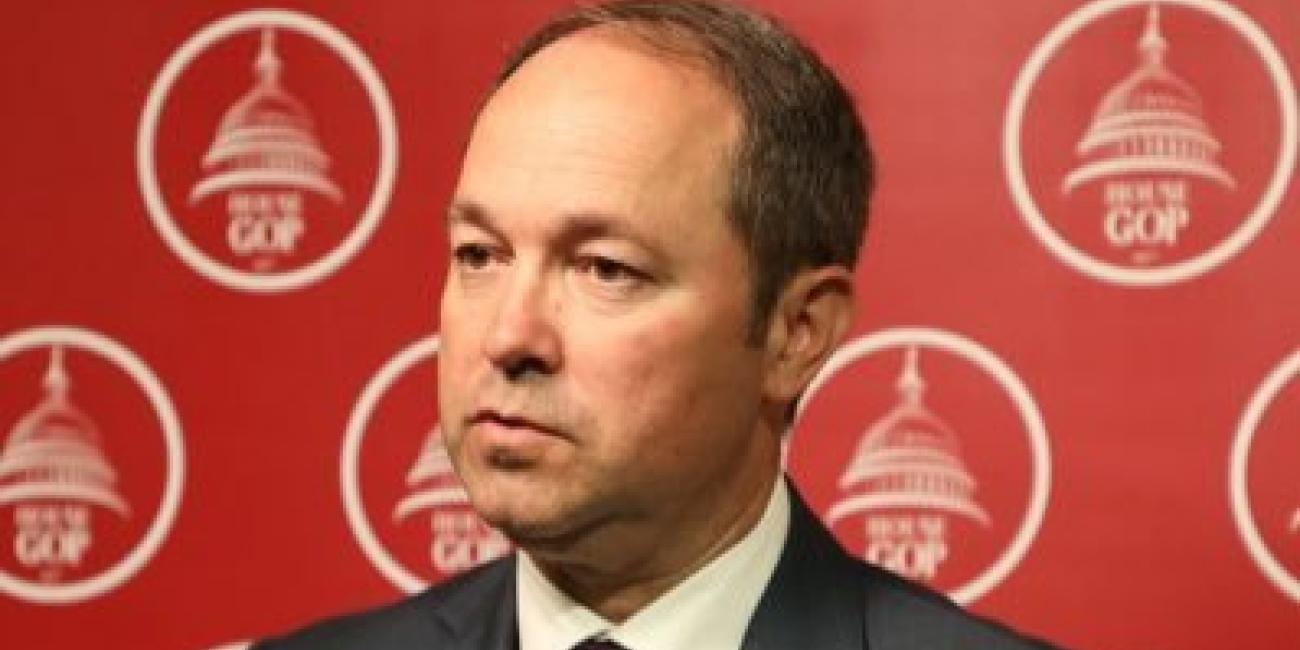
US lawmakers Marlin Stutzman and Ted Cruz have condemned the persecution of Christians in Nigeria, calling for urgent intervention.
Cruz earlier stated that Nigerian Christians were being “targeted and executed for their faith by Islamist terrorist groups.”
A United States lawmaker, Rep. Marlin Stutzman, has joined Senator Ted Cruz in condemning the alleged persecution of Christians in Nigeria, calling for urgent action to protect the beleaguered community.
The lawmakers’ recent comments follow reports of widespread violence and killings of Christians by jihadist groups in Nigeria. According to reports, thousands of Christians have been killed, and many others have been kidnapped and displaced in 2025 alone.
“We must use the targeted tools we have at our disposal to end it,” Republican Stutzman of Indiana said in a post shared on his X handle.
“Implementing Sharia law and condoning the murder of innocent people is barbaric.”
Cruz earlier stated that Nigerian Christians were being “targeted and executed for their faith by Islamist terrorist groups.” He added that Christians are being forced to submit to Sharia law and blasphemy laws across Nigeria.
Background
Rep. Anna Paulina Luna also condemned the silence surrounding the persecution, saying, “Christians are being hunted and slaughtered in Nigeria for their faith — and the world stays silent. If this were any other group, there’d be global outrage.”
The lawmakers’ call for action comes amid growing concerns about the worsening security situation in Nigeria, where extremist groups such as Boko Haram continue to wreak havoc on innocent civilians.
Meanwhile, the United States House Foreign Affairs Subcommittee on Africa has approved measures urging President Donald Trump to impose sanctions on Nigeria due to the widespread persecution of Christians.
The persecution of Christians in Nigeria is a pressing concern, with the country accounting for 90% of all Christians killed globally each year, according to a 2024 report by the Observatory for Religious Freedom in Africa.
For instance, between October 2019 and September 2023, at least 55,910 people were killed, and 21,000 others were abducted in attacks linked to terrorist groups and religious extremists.
Islamic terror groups Boko Haram and Islamic State West Africa Province (ISWAP) are primarily responsible for the violence in the northeast.
The Nigerian government has been criticised for its handling of the situation, with lawmakers accusing the government of turning a blind eye to Christian killings and allowing extremist groups to operate with impunity.
The US Commission on International Religious Freedom (USCIRF) has also warned that Nigeria’s security forces have failed to curb the violence and that, in some cases, local officials have been complicit.
The proposed sanctions could mark a significant shift in US-Nigeria relations, with potential economic and diplomatic implications for Nigeria. The US House Foreign Affairs Committee had advanced a resolution to increase sanctions and pressure on the Nigerian government over the rampant persecution of Christians and other minorities in the country.
This decision comes after a congressional hearing where lawmakers condemned the Nigerian government for failing to protect Christian communities from escalating violence.
SaharaReporters reported on Wednesday that the Catholic Bishop of Sokoto Diocese, Matthew Hassan Kukah, appealed to the international community not to re-designate Nigeria as a “Country of Particular Concern” over religious freedom violations.
Although he acknowledged the worsening Christian situation in Nigeria, especially in Northern Nigeria, his argument was that such a move could derail ongoing efforts to rebuild trust and promote interfaith harmony under President Bola Tinubu’s administration.
Speaking at the launch of the 2025 World Report on Religious Freedom by Aid to the Church in Need (ACIN) at the Augustinianum Hall in Vatican City, Kukah described Nigeria’s situation as tragic but cautioned against punitive international actions that could worsen divisions and hinder cooperation between religious leaders and the government.
He acknowledged that Nigeria has experienced years of violence, kidnappings, and destruction caused by jihadist and bandit groups, resulting in thousands of deaths and displaced persons.
He said, “For over 15 years now, these murderous gangs of Islamicists and jihadist groups have found their way into our country, wreaking havoc, destroying lives and properties, ravaging farmlands and leaving huge parts of the country empty of human existence.
“Along with this, a culture of uncontrolled banditry, thousands of communities have been destroyed, with thousands of lives lost.
“The country has witnessed an unacceptable surge in internal displacement in most parts of the north, especially around the middle belt states.
“The biggest challenge for us is the appropriate language to use in describing this tragedy. The reactions have been confusing. Early narratives spoke of farmer-herder clashes, climate change, cattle rustling, outright criminality, etc.
“With the emergence of Boko Haram and the targeting of Church structures, destruction of schools, hospitals, the kidnapping of priests, the religious, seminarians and other pastoral agents, the murderous gangs invoking the words like, allahu akubar as their anthem of death, there was no other way of speaking of persecution of Christians by these jihadist groups rather than calling them religious persecution targeted at Christians.
“Then came the sacking of communities and the occupation of swaths of lands by these terrorist and murderous groups. These groups would later target Muslims who did not believe in their brand of Islam. Today, the floods of blood in Nigeria have no boundaries. This is why the debate over what is happening to us has become so confusing within and outside Nigeria. Although we cannot find the right words, the simple truth is that Nigerians are dying for a living.”
Kukah noted that the confusion over the appropriate language is understandable.
Kukah explained that Nigerians feel vulnerable and unprotected irrespective of their faiths, ethnicity, or social classes. A significant part of our social life has literally collapsed as many citizens now fear large gatherings for social events or prayer.
THIS STORY ORIGINALLY APPEARED AT SAHARA REPORTERS