
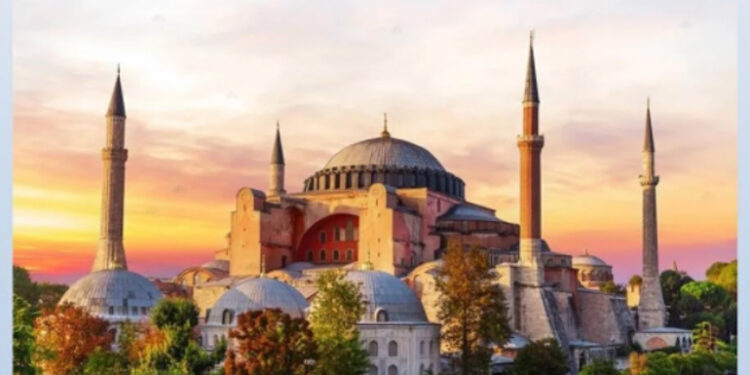
The capture of the City by the Muslims marked the tragic end of a sorrowful history fraught with many entanglements, both within and beyond its walls.
ORTHODOX TIMES:
With this phrase, the English Byzantinist Steven Runciman describes the conquest of Constantinople by the Ottomans, the widespread looting, and the triumphant entrance of Mehmed the Conqueror into Hagia Sophia on the night of the city’s fall, where, ‘ascending the Holy Altar,’ he gave thanks to Allah.”
Causes of the Fall
The capture of the City by the Muslims marked the tragic end of a sorrowful history fraught with many entanglements, both within and beyond its walls. The heinous crime of the Crusaders in 1204, the intellectual decline, religious fanaticism, attempts to enforce a union between the Orthodox and Roman Catholics, civil strife, and the encirclement of Constantinople by various enemies were among the chief causes of the fall of the Queen of Cities.
Most notably, the sense of self-sufficiency and the forgetting of God’s blessings prevented any change in mindset, despite, as historical sources suggest, divine warnings through enlightened individuals and natural signs of the impending catastrophe.
Even as the Ottoman threat loomed at the gates, the city’s rulers turned to Europe for aid. The Pope, however, made union with the Catholic Church a condition for assistance. With Emperor Constantine Palaiologos’s consent, he sent representatives to Constantinople. But their behavior incited resistance rather than unity. The wounds from the Crusades were still fresh, and in some areas, mistreatment of the Orthodox by the Catholics persisted.
Simultaneously, economic interests viewed the involvement of Venice and Genoa in the unfolding events with suspicion. These negotiations ultimately yielded no positive outcome.
Mehmed’s Preparations
By 1453, Mehmed II was nearly ready for the final assault. Since 1452, he had constructed the fortress Rumeli Hisar at the narrowest point of the Bosporus to secure full control of the region. With a force of approximately 150,000 to 300,000 men, ships, and artillery, he appeared terrifying…