
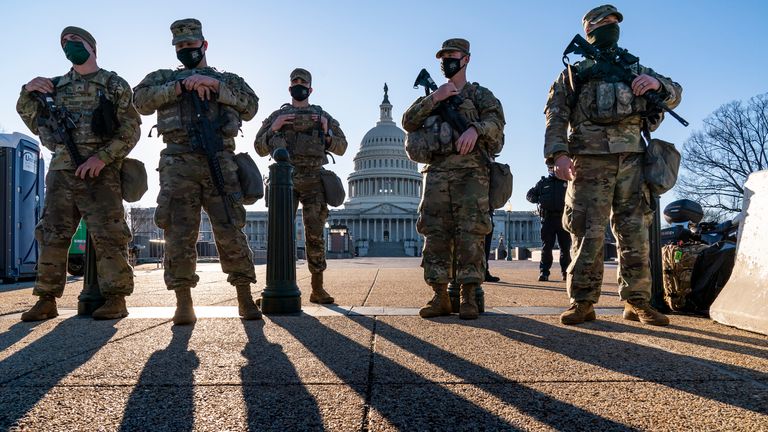
A California court is deciding whether sending National Guard soldiers into civilian law enforcement breaks the Posse Comitatus Act of 1878.
By Peter Imini
When most Americans think of the military, they picture soldiers deployed overseas—not patrolling the streets of Los Angeles. But that image was upended when President Donald Trump sent thousands of troops, including National Guard members, into California’s largest city last June against the wishes of Governor Gavin Newsom.
The move was part of the administration’s crackdown on immigration and an attempt to quell unrest following mass immigration raids. These raids targeted places where day laborers often gather, such as Home Depot parking lots, garment factories, and warehouses. Critics say the president’s decision marked a sharp break from the long-standing U.S. tradition of keeping soldiers out of civilian law enforcement.
On August 11, a non-jury trial began in San Francisco before U.S. District Judge Charles Breyer to determine whether the deployment violated the Posse Comitatus Act of 1878—a law designed to prevent the military from enforcing domestic laws. California’s Attorney General Rob Bonta called the deployment “political theater” and “public intimidation” with “no precedent in American history.”
The Trump administration insists troops were only protecting federal property and aiding Immigration and Customs Enforcement (ICE) agents—not enforcing civil laws. While many troops have been withdrawn, about 300 remain active in immigration operations across California.
If the court rules against the administration, it could limit the president’s ability to send troops into U.S. cities in the future—though Trump still has direct authority over the National Guard in Washington, D.C., without needing a governor’s approval.
This trial could redefine the boundaries of presidential power on American soil, setting a precedent that may echo in future administrations.