
A former USAID conflict adviser says Trump’s decision to cut Nigeria’s aid earlier this year weakened key peace-building programs, even as the president now contemplates military intervention in response to rising violence.
According to a report from LOS ANGELES TIMES, President Donald Trump’s recent directive ordering Defense Secretary Pete Hegseth to “prepare for possible action” to protect Christians in Nigeria has renewed debate over his earlier decision to cut U.S. aid to the country.
The order, issued on Truth Social, was reportedly influenced by Republican Senator Ted Cruz’s claim that the Nigerian government was “ignoring and even facilitating the mass murder of Christians by Islamist jihadists.”
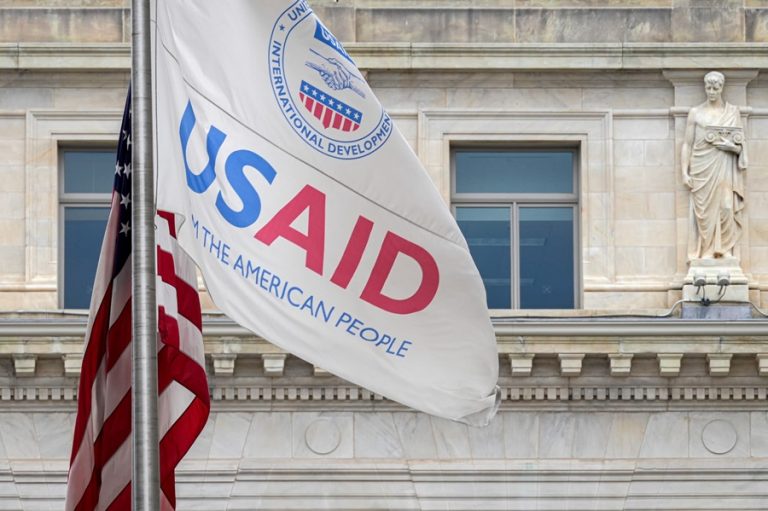
However, former USAID conflict adviser Daniel Morris noted that Trump had already halted significant U.S. assistance in March, raising questions about the effectiveness of military intervention after dismantling peace-building programs.
Morris, who served more than three years in Nigeria, said that soon after Trump took office, he assumed congressional powers and allowed the newly formed Department of Government Efficiency, led by Elon Musk and others, to terminate more than 5,000 aid programs.
One of the key initiatives shut down was the Community Initiatives to Promote Peace, which trained community elders in conflict resolution.
According to Morris, the program yielded “impressive” results. In communities that received intervention, only 10% reported violent incidents after six months, compared to 41% in areas without the training. Local Catholic, evangelical, and Muslim groups also expanded mediation efforts through USAID grants.
Morris warned that replacing diplomacy and peace-building with a “guns-a-blazing” approach could be ineffective, citing a 2023 attack on a U.S. consulate convoy in southeast Nigeria, where four people were killed and three kidnapped despite robust U.S.–Nigeria intelligence cooperation.
He argued that foreign aid had been a critical tool for reducing conflict and fostering stability, and its elimination now leaves the U.S. with fewer non-military options at a time of rising violence in Nigeria.