
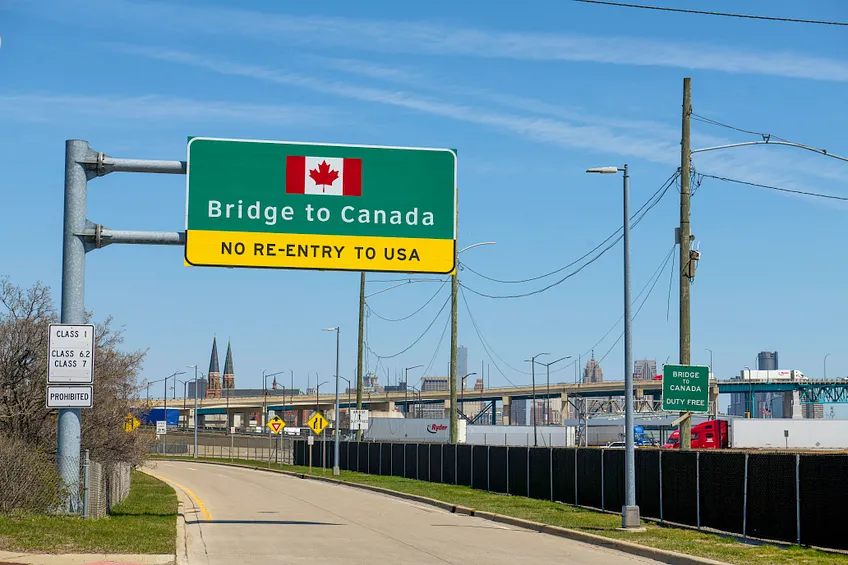
New checkpoints at U.S.-Canada crossings now employ facial recognition and photographic surveillance, raising alarm among legal experts.
Reports indicate that U.S. authorities are extending surveillance to land border exits amid a broader crackdown on pro-Palestinian student protestors.
New checkpoints at U.S.-Canada crossings now employ facial recognition and photographic surveillance, raising alarm among legal experts.
Many foreign students facing visa revocations for protest involvement have used land exits, especially the U.S.-Canada route, to leave. Though no detentions have occurred at the Canadian border yet, lawyers believe new measures target those seeking to avoid government detection.
“Tracking the departure of a person not a citizen is legally required,” said Greg Nojeim of the Center for Democracy & Technology. “But detaining people over political opinions is a grave concern.”
Lawyers say students exiting by land face less government oversight than air travel, as DHS has access to flight logs. Checkpoints have appeared near Washington state, but may expand. “If the government wants to know who is leaving, it could mean they’re seeking other ways to suppress speech,” a lawyer noted.
The measures coincide with increased immigration enforcement and raised fears of expanding surveillance against dissenting voices.