
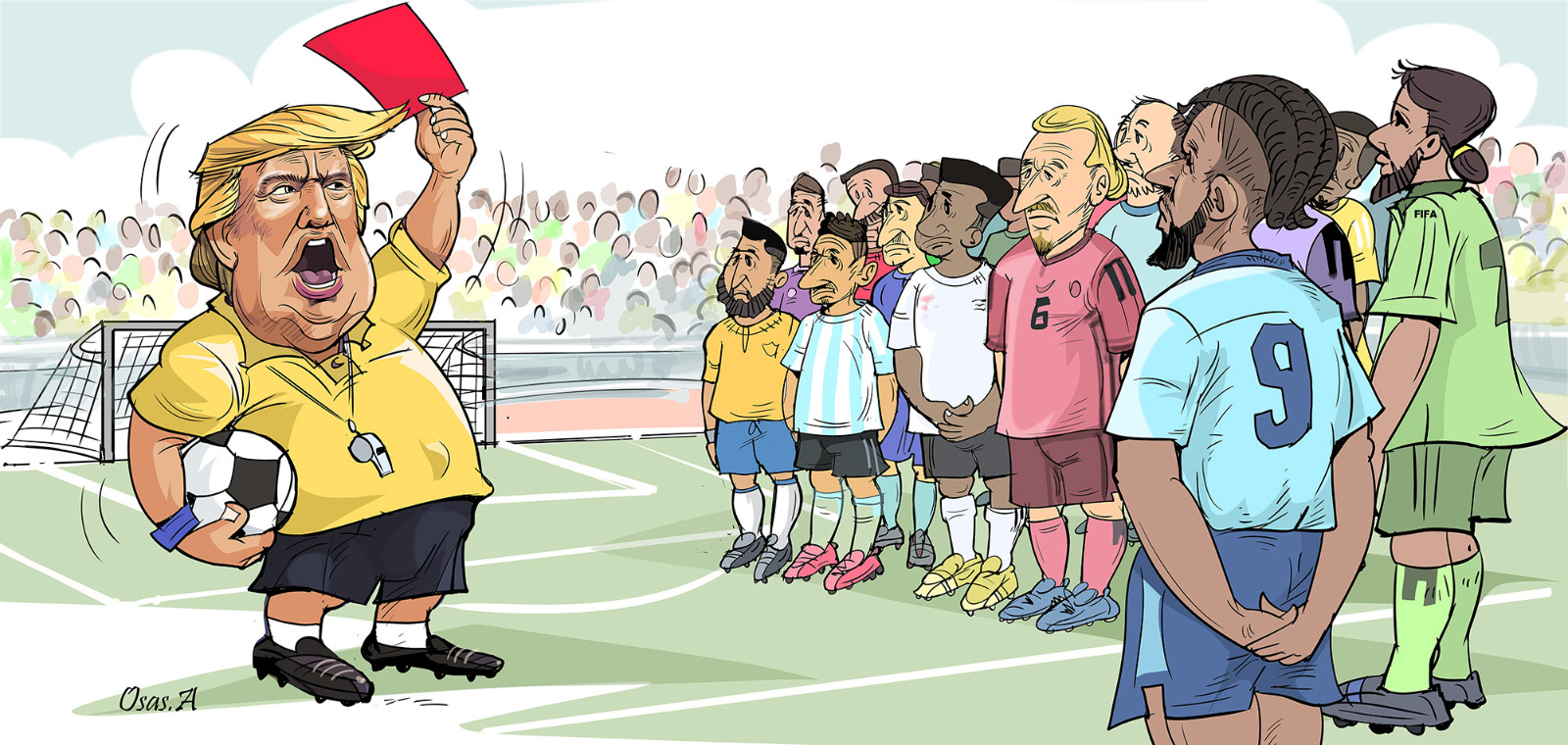
Stakeholders are expressing concern that Trump’s restrictive stance may discourage international fans, players, and officials from attending, potentially costing the U.S. tourism industry up to $64 billion in 2025.
As anticipation builds for the 2026 FIFA World Cup, which will be co-hosted by the United States, Canada, and Mexico, growing political tensions surrounding U.S. immigration and trade policies under President Donald Trump threaten to derail the tournament’s unifying spirit.
Stakeholders are expressing concern that Trump’s restrictive stance may discourage international fans, players, and officials from attending, potentially costing the U.S. tourism industry up to $64 billion in 2025. Reports from AFP and Tourism Economics already predict a 5.1% drop in international arrivals, amid fears of harsh border enforcement.
Despite FIFA’s assurance that “everything is working as scheduled,” civil society groups like Human Rights Watch and the Sport & Rights Alliance warn that discriminatory policies may violate the host nations’ human rights commitments.
“The 2026 World Cup will depend on workers in stadiums, hotels where fans stay, and at fan zones and restaurants,” said Minkey Worden of Human Rights Watch.
Trump’s re-election has revived concerns about his earlier travel bans and “America First” rhetoric. Although some visa exceptions exist for accredited individuals, advocates warn that heightened scrutiny could limit cultural exchange and fan participation — vital to the World Cup’s appeal.
While political observers argue that the U.S., as a sovereign nation, can regulate its borders, experts like Prof. Eghosa Osaghae maintain that FIFA will likely ensure protocols protect global access to the event.
Others, including Brila Media’s Dr. Larry Izamoje, warn that excluding fans “throws darts at the spirit of conviviality” and could impact players’ performances without the energy of their supporters.
With just months to kickoff, calls are growing for FIFA to pressure Washington into reaffirming commitments to accessibility, inclusion, and international cooperation — the pillars on which the World Cup was built.