
Earth has experienced five major mass extinctions over the past 500 million years, and scientists warn human activity may be driving a sixth.
Earth’s history has been shaped by cycles of creation and destruction, including five major mass extinctions over the last 500 million years. These events dramatically reshaped life, wiping out vast numbers of species.
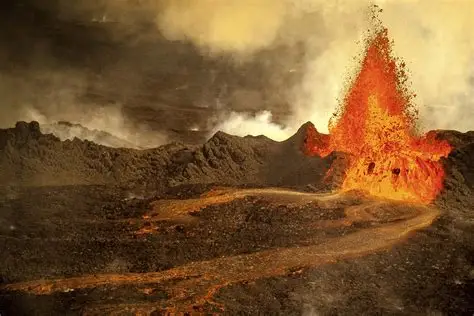
The Late Ordovician extinction around 444 million years ago erased more than 86% of species when a sharp climate shift triggered a devastating ice age. The Late Devonian extinction about 372 million years ago lasted millions of years, killing 75% of species, likely due to anoxia caused by algae blooms. The Permian-Triassic extinction, known as “The Great Dying,” struck 252 million years ago, with massive volcanic eruptions in Siberia wiping out up to 96% of species. At 201 million years ago, the Triassic-Jurassic extinction saw volcanic activity drive climate instability, eliminating 70% of species but paving the way for dinosaurs. Finally, the Cretaceous-Paleogene extinction 66 million years ago, caused by a giant asteroid impact, famously wiped out the dinosaurs and 75% of Earth’s species.
“Understanding the past five mass extinctions can help us make sense of what’s going on now,” scientists note, warning that human-driven climate change, deforestation, and pollution are accelerating extinctions at an alarming rate.
Unlike previous natural events, the current biodiversity crisis stems largely from human activity. “Our own actions… are accelerating the rate at which species are disappearing,” researchers caution.