
China’s energy security is under threat as the Israel-Iran war risks expanding into a broader Middle East conflict, potentially disrupting oil shipments.
Though Beijing officially reported no Iranian oil imports in 2024, analysts say discounted Iranian crude reaches Chinese independent refineries via transshipment, mostly from Malaysia.
Over 90 percent of Iran’s sanctioned oil reportedly goes to China. Six of China’s top ten oil suppliers are located in or near the Persian Gulf, making Beijing vulnerable to instability in the region. Energy markets remain volatile, with oil prices rising following President Donald Trump’s call for Iran’s “unconditioned surrender.” If Tehran blocks the Strait of Hormuz—through which 20 million barrels of oil pass daily—global prices could surge past $100 per barrel.
“Oil prices jumped with the start of Israel’s action against Iran,” said RAND economist Howard J. Shatz. “If Gulf oil infrastructure is attacked or Hormuz is blocked, the risk of a global recession rises.”
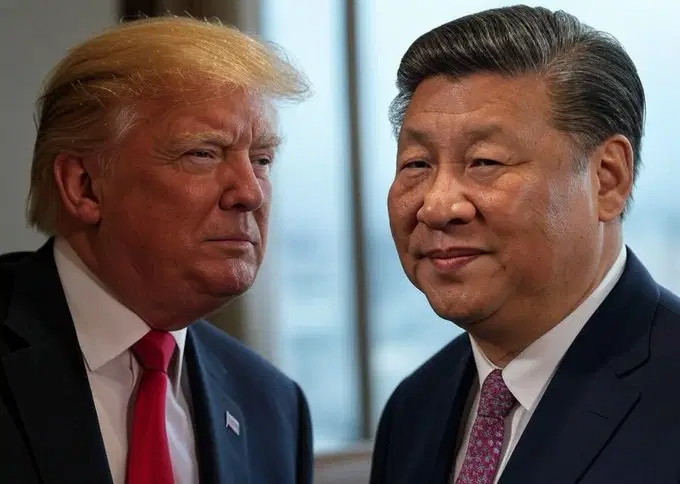
Chinese President Xi Jinping urged de-escalation, warning that further conflict would “greatly” harm the region. “Especially Israel,” he added, “should cease fire to avoid spillover.”