
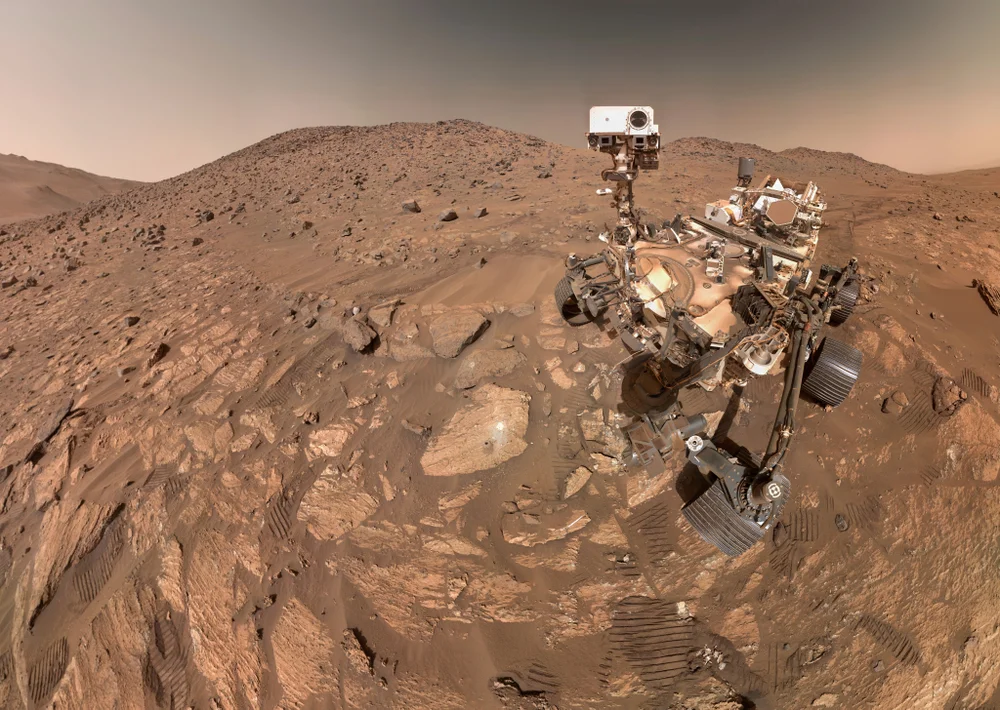
NASA’s Perseverance rover has uncovered its most compelling Mars sample yet, though scientists caution only Earth labs can confirm signs of past life.
NASA’s Perseverance rover has drilled rocks in a dry Martian river channel that may hold the strongest signs yet of ancient microscopic life, scientists announced Wednesday.
The sample, collected in Jezero Crater’s Neretva Vallis, contains chemical features that on Earth often result from microbial activity. But researchers cautioned that non-biological processes could also explain the findings.
“All we can say is one of the possible explanations is microbial life, but there could be other ways to make this set of features,” lead researcher Joel Hurowitz of Stony Brook University told AP.
The sample, Perseverance’s 25th so far, contains tiny specks rich in iron phosphate and sulfide. These compounds, Hurowitz noted, are “the best, most compelling candidate yet” in the rover’s search.
Scientists say only detailed analysis in Earth laboratories can confirm if life once existed. NASA’s mission to return the samples has been delayed, with costs pushing potential retrieval into the 2040s.