
A Case for Adopting a Jury System to break the cycle of impunity and restore public trust in Nigeria’s Justice System
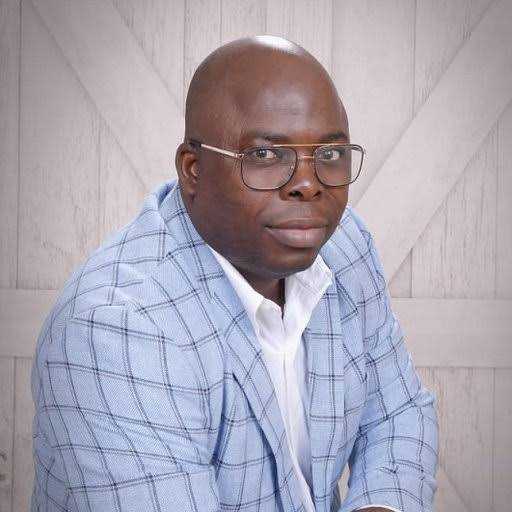
By Olarinre Salako Ph.D
Introduction
At the recent Nigerian Bar Association (NBA) conference, Dr. Oby Ezekwesili, Nigerian former Minister of Education, delivered a fiery rebuke to the legal profession. “Lawyers represent the heartbeat of professionalism in our country, in any society. You are the best of minds. Anyone who is able to train and become a lawyer represents the elite of our society. But what is going on is an abandonment of responsibility by the elite of our country.”
She reminded her audience that 133 million Nigerians are trapped in poverty, a condition sustained not by fate but by choices. Lawyers, she argued, sit at the heart of those choices because they determine what Nigeria’s rule of law rewards and what it punishes. She challenged the profession to evaluate whether it has provided the necessary guardrails against the excesses of the political class. “This country has to go back to where hard work is rewarded. This idea that politics is the pathway to becoming wealthy is an anomaly. Stop trading this profession. Stop giving this profession to a bunch of lousy politicians that want to destroy generations here and unborn. Don’t invite me here again!”
Her words ring painfully true.
This article corroborates her position with evidence and suggests a way forward. It highlights how lawyers—by action or inaction—have enabled corruption and injustice, and argues that without structural reform, moral conscience, and character formation, Nigeria cannot build a society where the law truly serves the people.
Lawyers at the Center of Nigeria’s Political Life
No group of professionals holds as much entrenched power in Nigeria’s political structure as lawyers. By constitutional design, every state and the federal government must appoint an Attorney-General and Commissioner or Minister of Justice—guaranteeing at least 37 positions for lawyers at all times. Judges, many legislators, and high-ranking officials are also drawn largely from the legal profession. But instead of being the guardians of justice, too many lawyers have become its saboteurs. They defend politicians and civil servants accused of looting public funds. They file endless motions and appeals to frustrate trials. They represent election riggers, ensuring that stolen mandates remain intact. The result is a justice system where trials drag on for years, verdicts can be manipulated, and ordinary Nigerians lose faith in the courts.
Instances of Justice Delayed
The Nigerian judiciary is littered with high-profile corruption cases that expose how justice is endlessly delayed and therefore denied.
Here are just few examples:
Ahmed Idris, the Accountant General of the Federation from 2015 to 2022. He was arrested in May 2022 for allegedly diverting and laundering over ₦109 billion (about $264 million) through bogus consultancies and proxies. Arraigned on a 14-count charge, he pleaded not guilty. More than three years later, as of August 2025, the case remains unresolved—bogged down by technicalities and delays.
Diezani Alison-Madueke, the Minister of Petroleum from 2010 to 2015, who has faced allegations of embezzling over $2.5 billion in oil revenues. Since 2015, the EFCC has seized luxury properties and jewelry linked to her, yet she has never stood trial in Nigeria. In the United Kingdom, she was finally arraigned in 2023 on bribery charges, but at home her cases remain frozen in legal limbo for almost 10 years.
Abdulrasheed Maina, former Chairman of the Pension Reform Task Team, shows how legal stalling tactics can cripple accountability. First investigated in 2012 for diverting ₦2 billion in pension funds, he fled to Dubai, was controversially reinstated in 2017, and was only arrested again in 2019. His trial was riddled with adjournments, medical excuses, and bail-jumping, until he was re-arrested in Niger Republic. He was eventually convicted and sentenced to eight years imprisonment in November 2021—nine years after the case began.
Perhaps the most notorious is James Ibori, the Governor of Delta State from 1999 to 2007. He was accused of looting over $250 million. His Nigerian trial, which began after his tenure, dragged on two years with endless adjournments and technical objections. By 2009, he was controversially acquitted of 170 corruption charges. Yet in the UK, where the evidence was swiftly tested, he pleaded guilty in 2012 to 10 counts of fraud and money laundering and was sentenced to 13 years in prison. Justice collapsed at home but was delivered abroad!
These are not anomalies—they are the norm. And in many cases, the accused continue to enjoy the proceeds of their loots even while cases remain “ongoing.”
Why Nigeria Needs a Jury System
One core concept of criminal justice upheld by democracy is the “presumption of innocence”: even a known murderer, treasury looter, or election rigger remains “innocent until proven guilty.” This safeguard prevents mob justice, but in Nigeria it has become a shield for impunity.
Lawyers exploit it, and judges reinforce it with endless adjournments and technical rulings. The problem is worsened by the absence of jury trials. Today, lawyers defend corrupt officials, later ascend the bench, and the cycle of impunity continues.
The United States is the most prominent example of a jury-centered system. In criminal trials, juries of 12 citizens weigh the evidence and decide guilt or innocence, while the judge interprets the law and ensures procedure. Jurors come from all walks of life—teachers, doctors, engineers, artisans, farmers, and professors. This spreads responsibility across society and injects a layer of community conscience into the courtroom. It is one reason why even powerful politicians and billionaires can still be convicted in the U.S. if evidence is strong.
Britain, from which Nigeria inherited its legal system, also has a long jury tradition. In England, Wales, and Northern Ireland, juries hear serious criminal cases like murder, rape, and armed robbery in the Crown Court. Civil juries exist too, though rare. Scotland is unique: its juries have 15 members and may return one of three possible verdicts— “guilty,” “not guilty,” or “not proven.” That third option acknowledges that evidence may be insufficient to convict but suspicion remains, reflecting a society’s traditions and values.
Other Commonwealth countries follow similar models. Canada, Australia, and New Zealand all use 12-member juries for serious criminal cases, with some regions allowing majority verdicts instead of unanimity. Citizens see jury duty as part of civic responsibility, much like voting, which strengthens public ownership of justice.
Even outside the Commonwealth, versions of juries exist. Japan reintroduced a hybrid model in 2009, where six lay citizens sit with three professional judges in serious trials. South Korea has experimented with advisory juries since 2008, whose verdicts are usually respected by judges. France’s cour d’assises combines three judges with six or nine lay citizens, while Norway and Spain use mixed tribunals of lay assessors and judges.
These examples show that jury systems are adaptable across cultures.
Nigeria’s justice system must be similarly democratized by adopting a jury system that would break the monopoly of lawyers and judges, by involving citizens from diverse professions in verdicts. It would connect law with conscience into the courtroom, ensuring justice reflects not only technical procedure but also the moral judgment of society. It will restore public trust in the judiciary, and make corruption harder to sustain—after all, it is far more difficult to bribe twelve jurors than one presiding judge.
The Need for Character Beyond Law
Yet even a jury system cannot succeed without character. As Alexis de Tocqueville warned in Democracy in America, democracies survive not by laws alone but by the “habits of the heart”—civic virtue and moral conscience. Nigeria borrowed constitutional democracy from the West but neglected the culture of integrity that sustains them.
This is why even after conviction abroad, James Ibori remains an influential political ally to many – even to the President.
It is why looters under trial are still celebrated at political rallies.
Until Nigerians rebuild a culture of honesty, discipline, and accountability, laws—no matter how well designed—will continue to be twisted.
Therefore, reform must begin with character formation. At home, parents must instill honesty and discipline. In schools, civic education and ethics must complement academics. In public life, leaders must model integrity instead of impunity. A people without conscience will always twist the law to serve themselves.
The Way Forward
Nigeria must see its laws as tools to uphold good character and social norms, not as shields for impunity. This requires multiple reforms. First, citizens must demand that due process serves the common good, not criminals. A vigilant public, supported by civil society and the media, is the strongest antidote to legal manipulation. Second, the adoption of a jury system should be considered. By democratizing justice, it will weaken the stranglehold of the legal profession and restore credibility to the courts. Third, accountability within the legal profession must be strengthened. The Nigerian Bar Association (NBA) and National Judicial Council (NJC) must sanction practitioners who deliberately frustrate justice through technicalities and endless adjournments.
Finally, Nigeria must reconsider the role of the Attorney-General. Some within the NBA propose splitting the office from that of the Minister of Justice. While attractive, this risks further bloating political offices. A better approach is to allow senior civil servants in the Ministry of Justice to handle administrative duties, leaving the Attorney-General to focus strictly on legal and prosecutorial responsibilities. Structural reform, however, will only succeed if the office is occupied by men and women of conscience, resistant to political interference.
Conclusion
Dr. Ezekwesili’s challenge to Nigerian lawyers is ultimately a challenge to all Nigerians. We cannot continue trading the noble profession of law for political convenience and self-enrichment while 133 million citizens languish in poverty. A democracy without conscience is a democracy in name only.
If Nigeria is to survive, its legal profession must rediscover its duty as the conscience of the nation. And the people must demand a justice system that reflects not just technical law, but the moral will of society. Laws are meant to uphold character. Without character, even the best laws will fail.
Dr Olarinre Salako, a native of Oyo Town, writes from Texas, USA. He is a multidisciplinary scientist with expertise in energy, oil and gas, automotive, data analytics, and artificial intelligence. He is also an opinion writer, passionate about Nigerian nation building.