
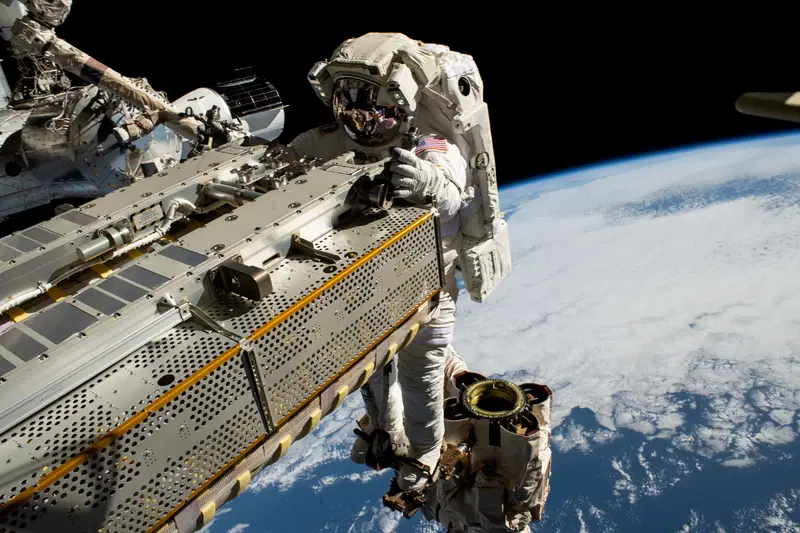
NASA will study Nigerian crops including okra, melon, and maize aboard the ISS as part of a mission to explore agriculture in space and food security.
Nigeria will participate in NASA’s Crew-11 Mission, where six indigenous crop seeds—okra, cowpea, Guinea corn (sorghum), amaranth, maize, and melon—will be studied aboard the International Space Station (ISS).
Dr. Felix Ale, Director of Media and Corporate Communications at NASRDA, announced this in Abuja on Thursday. The research aims to assess how Nigerian crops respond to space conditions, particularly microgravity, to improve climate resilience, food security, and the future of agriculture in space.
“The World Seeds Payload is a groundbreaking agricultural experiment championed by Jaguar Space with contributions from 11 emerging space-faring nations, including Nigeria,” Ale stated.
He noted this marks Nigeria’s first biological payload on a crewed NASA mission, strengthening its global scientific cooperation.
The seeds were delivered after a memorandum of understanding was signed between NASRDA and Jaguar Space.
“This project blends science with culture, making space exploration more inclusive,” Ale added. Mrs. Olayinka Fagbemiro will represent Nigeria at the project’s official launch.