
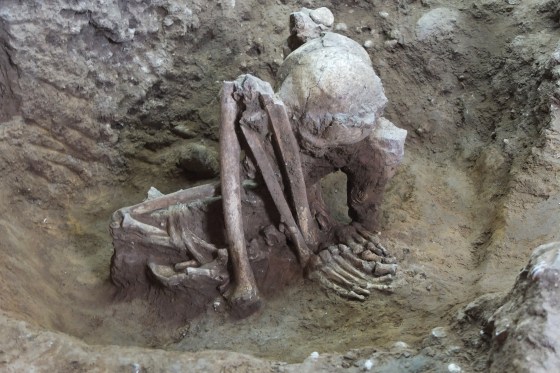
A new study reveals that hunter-gatherer communities in southern China and Southeast Asia practiced smoke-drying mummification over 9,000 years ago, predating Egypt’s oldest known mummies by millennia.
Archaeologists have identified what may be the world’s oldest mummies, dating back more than 9,000 years, in southern China and Southeast Asia, a new study published in the Proceedings of the National Academy of Sciences reports.
The research examined 54 pre-Neolithic burials from 11 archaeological sites across the region, with large numbers of samples from Vietnam and China’s Guangxi Zhuang Autonomous Region and smaller groups from the Philippines, Laos, Thailand, Malaysia and Indonesia. Many human remains were found in tightly crouched postures, often with evidence of burning.
“We found that in southern China and Southeast Asia, there were many archeological sites that contain human burials that are between four and 14,000 years old,” said Professor Peter Bellwood, a co-author of the study. Researchers concluded the bodies had been smoke-dried over fire for extended periods before burial, a deliberate process of mummification.
The remains “belong to an original hunter-gatherer population that occupied Southeast Asia in Paleolithic times, and that continued in occupation in places like Australia and New Guinea through into current times,” Bellwood added.
Until now, the oldest known mummies were from modern-day Peru and Chile, prepared by the Chinchorro people about 7,000 years ago.
Salima Ikram, professor of Egyptology at the American University in Cairo, called the discovery significant. “The term has been taken on by other groups to identify other preserved bodies. So it’s got a much more general understanding now,” she said. “What is nice is that the idea behind it is similar, because they wanted to preserve the body.”
Lead author Hsiao-chun Hung described the seven-year project as “a bit like detective work — finding small clues, piecing them together, and growing increasingly confident in the hypothesis.”