
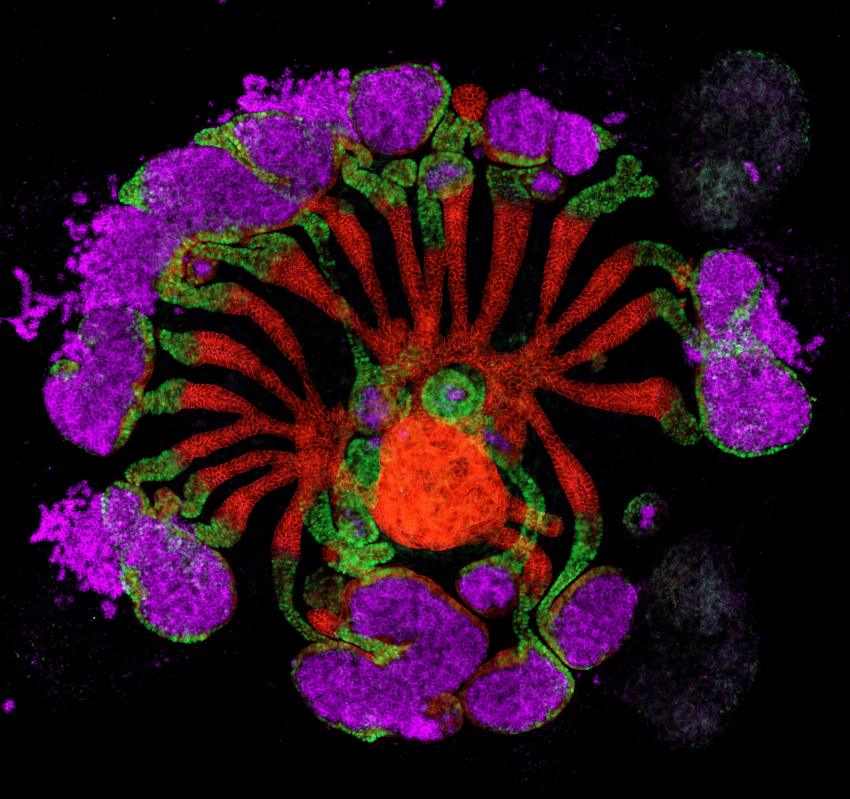
Researchers have created the most complex synthetic kidneys yet, called assembloids, which matured inside mice and showed signs of function.
Scientists have grown the most advanced synthetic kidneys to date by combining nephrons and collecting ducts into lab-made structures called assembloids. The study, led by Zhongwei Li at the University of Southern California, marks a step forward in regenerative medicine and disease research.
“This is a revolutionary tool for creating more accurate models for studying kidney disease, which affects one in 7 adults,” said Li. “It’s also a milestone towards our long-term goal of building a functional synthetic kidney for the more than 100,000 patients in the US awaiting transplant.”
The team generated mouse and human assembloids from kidney progenitor cells, which were then transplanted into the abdomens of living mice. Inside the body, the organs matured further, forming connective tissue, blood vessels, and even displaying kidney-like functions, including filtering blood, taking up proteins, secreting hormones, and early urine production.
Researchers say the work provides a powerful foundation for engineering fully functional synthetic kidneys in the future.