
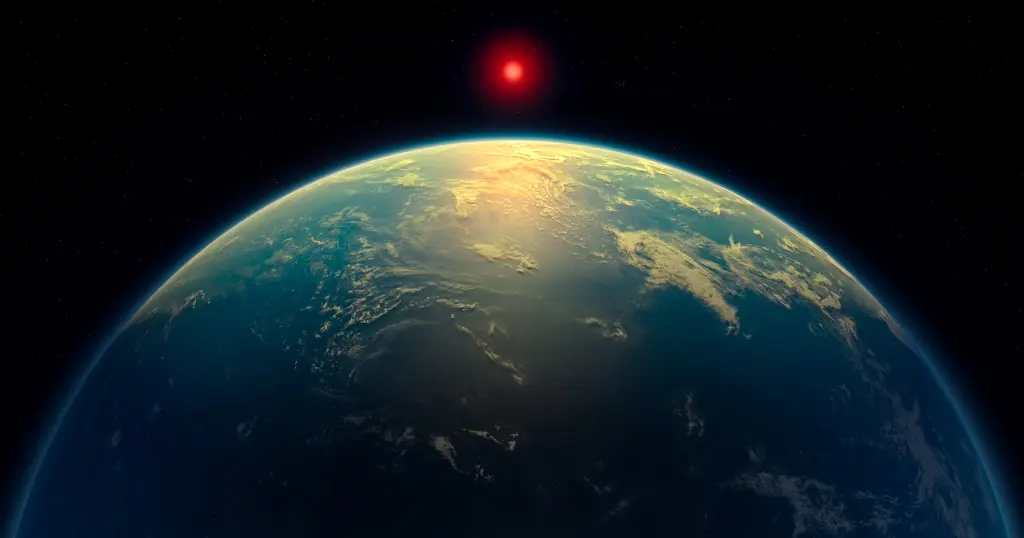
Scientists have identified huge quantities of chemicals only made by living organisms on Earth in the atmosphere of an exoplanet 124 light-years away
The detection of dimethyl sulfide and dimethyl disulfide—molecules primarily produced by microbial life such as marine phytoplankton—represents what experts are calling a ‘huge, transformational moment’ in the search for extraterrestrial life.
Scientists have discovered what may be the strongest evidence yet of life beyond our solar system on an ocean-covered exoplanet located 124 light-years from Earth.
Researchers led by the University of Cambridge detected chemical signatures typically associated with living organisms in the atmosphere of K2-18b, a planet in the constellation Leo.
Using the James Webb Space Telescope (JWST), the team identified substantial amounts of dimethyl sulfide (DMS) and dimethyl disulfide (DMDS) – molecules primarily produced by marine phytoplankton and other microbial life on Earth.
“This is the most promising sign yet of biological activity outside our solar system,” according to astronomers involved in the research, who described the finding as a “huge, transformational moment” in the search for extraterrestrial life.
K2-18b appears to be predominantly covered by water, creating conditions potentially conducive to life forms similar to microorganisms found in Earth’s oceans.
The discovery represents a significant breakthrough in exoplanet research and astrobiology, providing compelling evidence that the chemical markers of life might exist beyond our planet.