
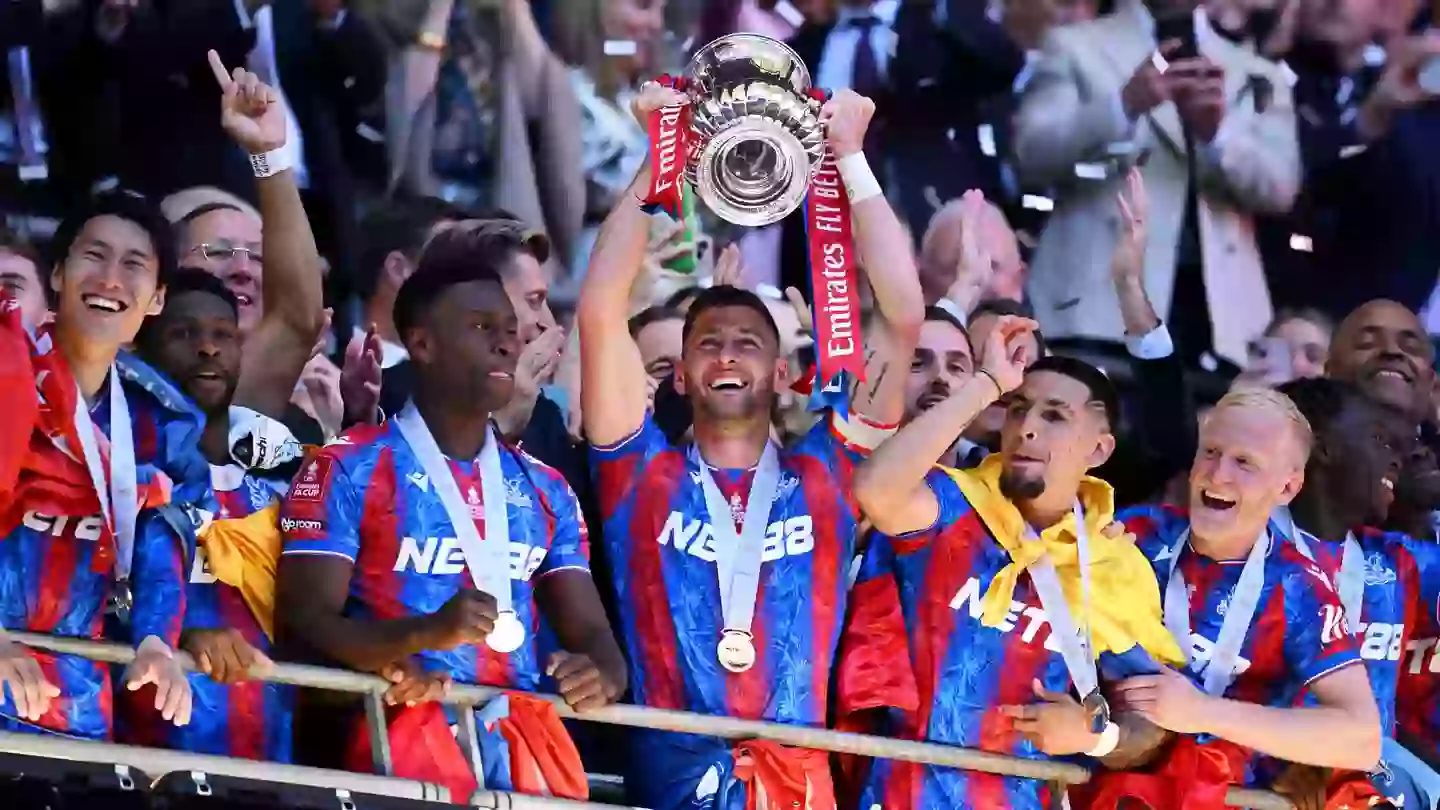
Crystal Palace’s FA Cup glory was meant to mark a European breakthrough—until UEFA rules slammed the door shut.
When Crystal Palace lifted the FA Cup, fans erupted in jubilation. For the first time in the club’s history, European football was secured. Or so they thought.
This week, UEFA confirmed that Lyon, not Crystal Palace, would play in the 2025/26 Europa League. The decision sparked confusion, frustration, and a brewing legal storm.
What happened
UEFA regulations strictly forbid “any individual or entity from influencing more than one club in the same European competition.” It’s a rule designed to prevent match manipulation and protect competition integrity.
Here’s the catch: John Textor’s Eagle Football owns 77% of Lyon and 43% of Palace. While Palace argued that they operate independently, UEFA wasn’t convinced. Textor even agreed to sell his Palace stake to New York Jets owner Woody Johnson, but the deal didn’t close in time.
To complicate matters further, Lyon had been facing relegation from Ligue 1 over financial breaches, which would’ve cleared the way for Palace. But once Lyon successfully appealed that relegation, they were reinstated—and, as sixth-place finishers in France, leapfrogged Palace for the final Europa League slot.
Fair or not?
Palace fans are understandably livid. After all, their club earned a spot by winning a major domestic trophy. The team outperformed expectations and saw European qualification as a massive step forward.
“We qualified on the pitch, not on paper,” a Palace supporter posted on X.
“UEFA punishing us for something we can’t control is outrageous.”
But UEFA insists it must uphold its rules evenly, regardless of sentiment. According to its charter, even “potential influence” through shared ownership is a risk to competition integrity.
Football governance expert Andrew Warshaw explains:
“The rules exist for good reason. It’s about safeguarding the game. But the timing and complexity here make it a public relations disaster for UEFA.”
Could it have been handled better?
Yes. UEFA’s delay in deciding—combined with Lyon’s late legal win and the unfinalized sale of Palace shares—created a perfect storm. Palace now face either accepting their demotion or challenging UEFA in court.
“We will explore all legal avenues,” a Palace spokesperson reportedly said. The club feels it did everything in its power, including working toward an ownership change, to comply with UEFA regulations.
The Bottom Line
UEFA may be technically justified—but in the court of public opinion, this feels like punishing the wrong party. Palace earned their shot at Europe on the pitch. If administrative red tape is all that stood in their way, fans are right to ask: Is the spirit of the game still alive?