
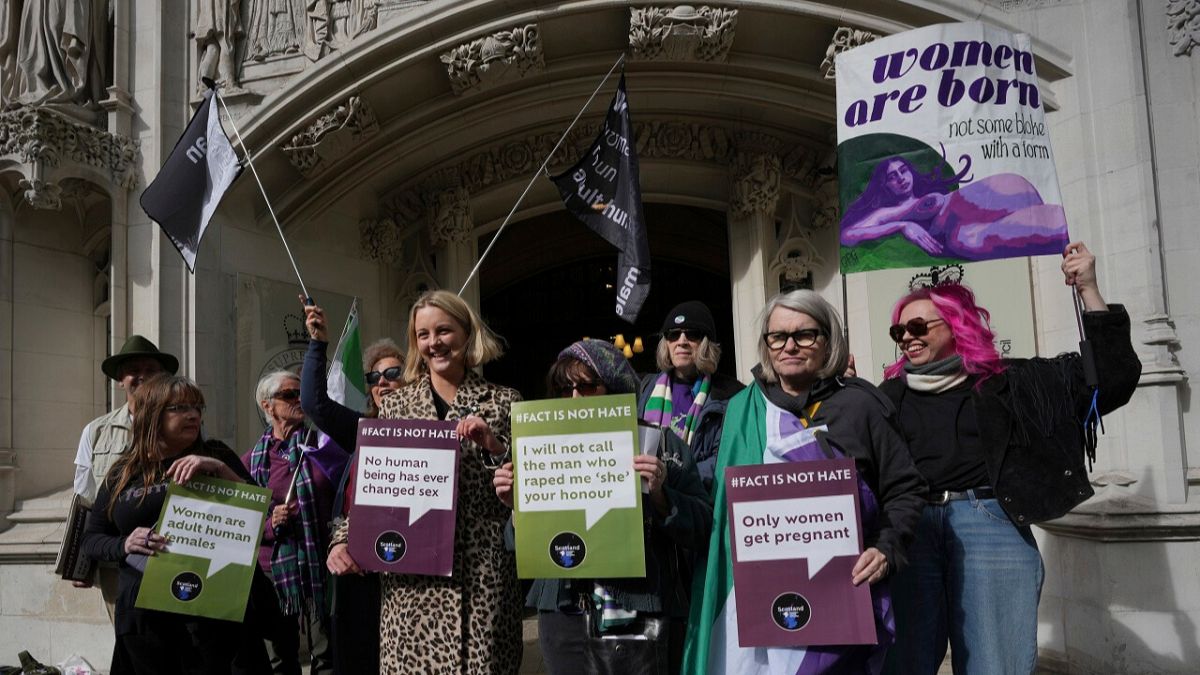
The United Kingdom Supreme Court has ruled that the definition of a woman under the country’s equalities law refers to someone born biologically female.
The UK Supreme Court has unanimously ruled that the term “woman” under Britain’s Equality Act refers solely to those born biologically female, rejecting the Scottish government’s push to include transgender women. Justice Patrick Hodge emphasized the 5-0 decision clarifies legal definitions but stressed it “does not remove protection from trans people,” who remain shielded against gender reassignment discrimination.
The case originated from Scotland’s 2018 public board gender quota law, which counted transgender women toward its 50% female representation target. Feminist groups celebrated the verdict, with Maya Forstater of Sex Matters declaring: “The protected characteristic of sex refers to reality, not paperwork.”
Women’s group For Women Scotland successfully argued that expanding the definition exceeded devolved powers. Despite new Scottish guidance including gender-recognized individuals, the court affirmed biological sex as the legal benchmark—a decision activists call a victory for “material reality.”
READ THE FULL STORY IN EURO NEWS