
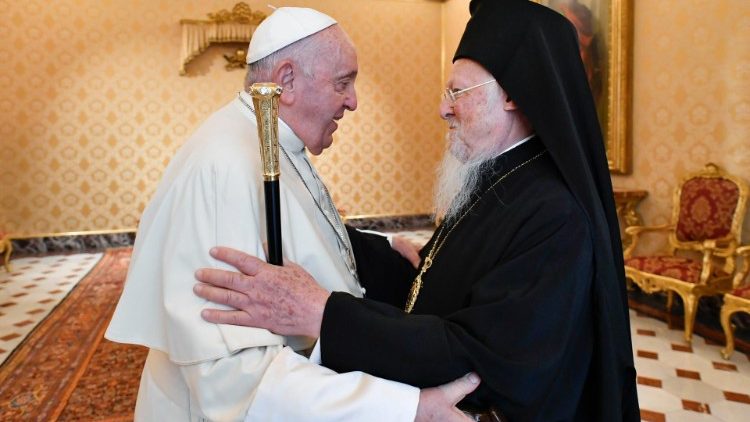
After centuries of celebrating Easter on different dates, Catholic and Orthodox Christians will mark the resurrection of Jesus together this Sunday. Church leaders, including Pope Francis and Ecumenical Patriarch Bartholomew, are seizing the rare alignment as a chance to promote unity — though deep-rooted mistrust remains.
ATHENS, Greece – For more than 400 years, Catholic and Orthodox churches have used different ways to determine the date of Easter Sunday.
But this Sunday will mark a special moment for Christians, as the churches celebrate of Jesus’ resurrection on the same day.
What’s more, top religious leaders — including Pope Francis — are expressing a desire to keep it that way. But the unusual alignment has stirred underlying mistrust between the two major Christian communions.
The discrepancy stems from the 16th-century adoption of the Gregorian calendar by the Western church, while the Eastern Orthodox Church retained the older Julian calendar. Furthermore, each church employs distinct ecclesiastical calculations for determining the spring equinox and lunar cycles, leading to Easter dates sometimes diverging by up to five weeks.
Pope Francis recently highlighted this year’s coincidence, invoking the upcoming 1,700th anniversary of the Council of Nicaea. “Let this coincidence serve as a sign — a call to all Christians to take a decisive step toward unity around a common date for Easter,” Francis stated. He previously described the differing dates as “a bit ridiculous,” quipping about conflicting resurrection timings.
Ecumenical Patriarch Bartholomew, spiritual leader of the world’s Orthodox Christians, has echoed this sentiment, calling the initiative “a real step toward repairing old conflicts.”
However, establishing a permanent common date faces hurdles. Proposals, like one from the World Council of Churches using modern astronomy, often founder on the implication that one tradition must concede, stirring historical mistrust, particularly Orthodox wariness of Vatican influence. Father Anastasios, an Orthodox priest in Athens, expressed caution: “We cannot distort our faith or the traditions… the unity sought in the past… often wasn’t sincere; it came with strings attached.”