
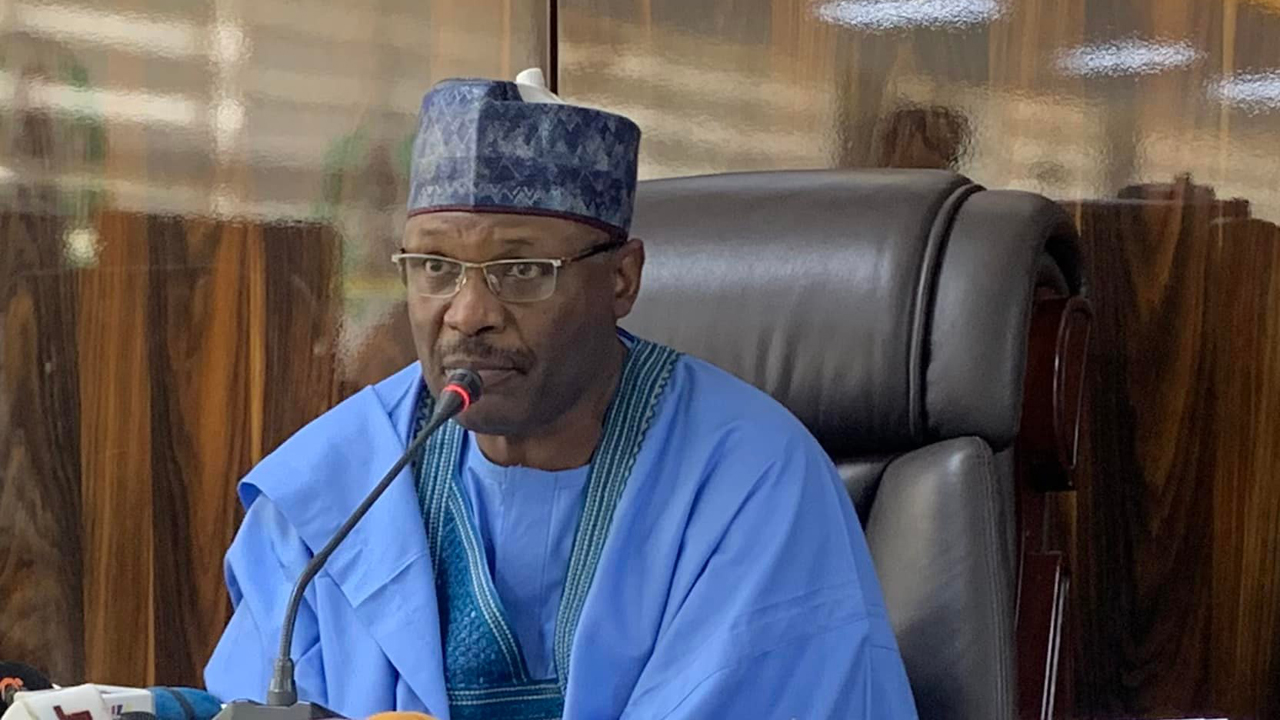
Former INEC Chairman Mahmood Yakubu says technological innovations have enhanced Nigeria’s elections but cannot eliminate persistent challenges such as violence, vote trading, and corruption.
The immediate past Chairman of the Independent National Electoral Commission (INEC), Prof Mahmood Yakubu, has said that while technology has improved Nigeria’s electoral process, it cannot by itself end flaws that threaten the credibility of elections.
Yakubu made the remarks in a new INEC publication titled Election Management in Nigeria: 2015–2025, which reviews the commission’s operations, reforms, and challenges during his decade-long leadership.
“The decade between 2015 and 2025 has been one of the most momentous in the history of the management of elections in Nigeria,” he wrote, noting major milestones such as the introduction of the Bi-Modal Voter Accreditation System (BIVAS), INEC Voter Enrolment Device, and online results viewing portal.
However, Yakubu admitted that persistent problems—including electoral violence, conflicting court rulings, vote trading, and logistical failures—still undermine Nigeria’s polls. “Technical challenges with equipment and connectivity failures have sometimes hindered the smooth conduct of elections,” he added.
He stressed that reforms, voter education, and stronger collaboration with security agencies remain critical. “Only in and through these can [INEC] ensure the conduct of free, fair, credible, and inclusive elections,” Yakubu said.
Reacting, opposition parties, including the PDP and Labour Party, accused Yakubu of hypocrisy, alleging that his tenure worsened electoral credibility. But the NNPP argued that politicians, not INEC, bear greater responsibility for flawed elections.
Yakubu served as INEC chairman from 2015 to 2025, overseeing the 2019 and 2023 general elections marked by both technological progress and controversy.